
Introduction: The Dawn of a New Era of Conflict
World War I, often referred to as The Great War, erupted in 1914 and lasted until 1918, leaving an indelible mark on global history. It was a war unlike any other the world had seen, involving over 30 nations across Europe, Africa, the Middle East, and Asia. Triggered by political tensions, complex alliances, and nationalistic fervor, this war redefined the nature of combat, diplomacy, and international relations. Its unprecedented scale and brutality reshaped political borders, economies, and societies, setting the stage for major global transformations in the 20th century.
Before World War I, Europe had enjoyed a relative period of peace, but underneath, alliances such as the Triple Entente (France, Russia, and Britain) and the Triple Alliance (Germany, Austria-Hungary, and Italy) were forming, creating a tense geopolitical environment. The assassination of Archduke Franz Ferdinand of Austria-Hungary in Sarajevo on June 28, 1914, acted as a spark, igniting the powder keg of Europe into a full-scale war.
Causes of World War I: The Perfect Storm of Global Tensions
Militarism and Arms Race
One of the primary causes of World War I was militarism. European powers were engaged in an intense arms race, building massive armies and navies. Countries believed that national strength depended on military might, and this ideology contributed to a culture where war was seen as an acceptable solution to disputes. Germany, in particular, invested heavily in expanding its navy to rival Britain’s Royal Navy, creating tension and suspicion among other nations.
Alliances and Entanglements
The intricate system of alliances also played a critical role. The Triple Alliance and Triple Entente divided Europe into opposing camps. While these alliances were originally intended to maintain balance and prevent war, they paradoxically ensured that a conflict involving one country could escalate into a continental war. This web of treaties and promises meant that a local dispute could trigger a chain reaction, drawing multiple nations into battle.
Imperialism and Economic Rivalries
Imperial ambitions were another significant factor. European powers competed for colonies, resources, and markets around the world. Germany, a latecomer to colonial expansion, sought to challenge Britain and France for global influence. The scramble for Africa and tensions in the Middle East exacerbated international rivalries, making diplomatic resolutions increasingly difficult.
Nationalism: Pride and Prejudice
Nationalistic fervor swept across Europe during the early 20th century. Ethnic groups sought independence, and major powers sought to assert dominance. Serbia’s nationalism, in particular, threatened Austria-Hungary, ultimately leading to the assassination of Archduke Ferdinand. National pride fueled public support for war, making diplomacy less effective and pushing nations toward inevitable conflict.
Major Participants: Allies and Central Powers
World War I divided the world into two main factions:
- Allies (Entente Powers): France, Britain, Russia, Italy (from 1915), Japan, United States (from 1917), and other nations.
- Central Powers: Germany, Austria-Hungary, Ottoman Empire, Bulgaria.
Each country brought its unique military strategy, political goals, and economic power to the war. While the European front received most attention, battles in the Middle East, Africa, and the Pacific demonstrated the truly global nature of the conflict.
Major Battles of World War I
Battle of the Marne (1914)
The First Battle of the Marne was a decisive engagement that stopped Germany’s advance into France. It highlighted the importance of strategic planning and coordination among allied forces. The battle is also remembered for the use of taxis to transport troops, a remarkable logistical effort that reflected the desperation and innovation of wartime.
Battle of Verdun (1916)
Verdun stands as a symbol of French resilience. Lasting over 300 days, it was one of the longest and bloodiest battles of World War I. Both sides suffered hundreds of thousands of casualties, and the relentless artillery bombardments created a landscape of unimaginable devastation. Verdun exemplified the futility and human cost of trench warfare.
Battle of the Somme (1916)
The Somme Offensive, initiated by the British and French, was intended to break the stalemate of trench warfare. Despite immense sacrifices, the gains were minimal, showcasing the deadly efficiency of modern weaponry such as machine guns and heavy artillery. The battle emphasized the war’s unprecedented scale and the psychological toll on soldiers.
Gallipoli Campaign (1915-1916)
The Gallipoli Campaign in the Ottoman Empire was an attempt by the Allies to open a new front and secure a sea route to Russia. Harsh terrain, strong defenses, and poor planning led to a costly failure, cementing the campaign as a significant example of wartime miscalculation.
Life in the Trenches: The Horror of Modern Warfare
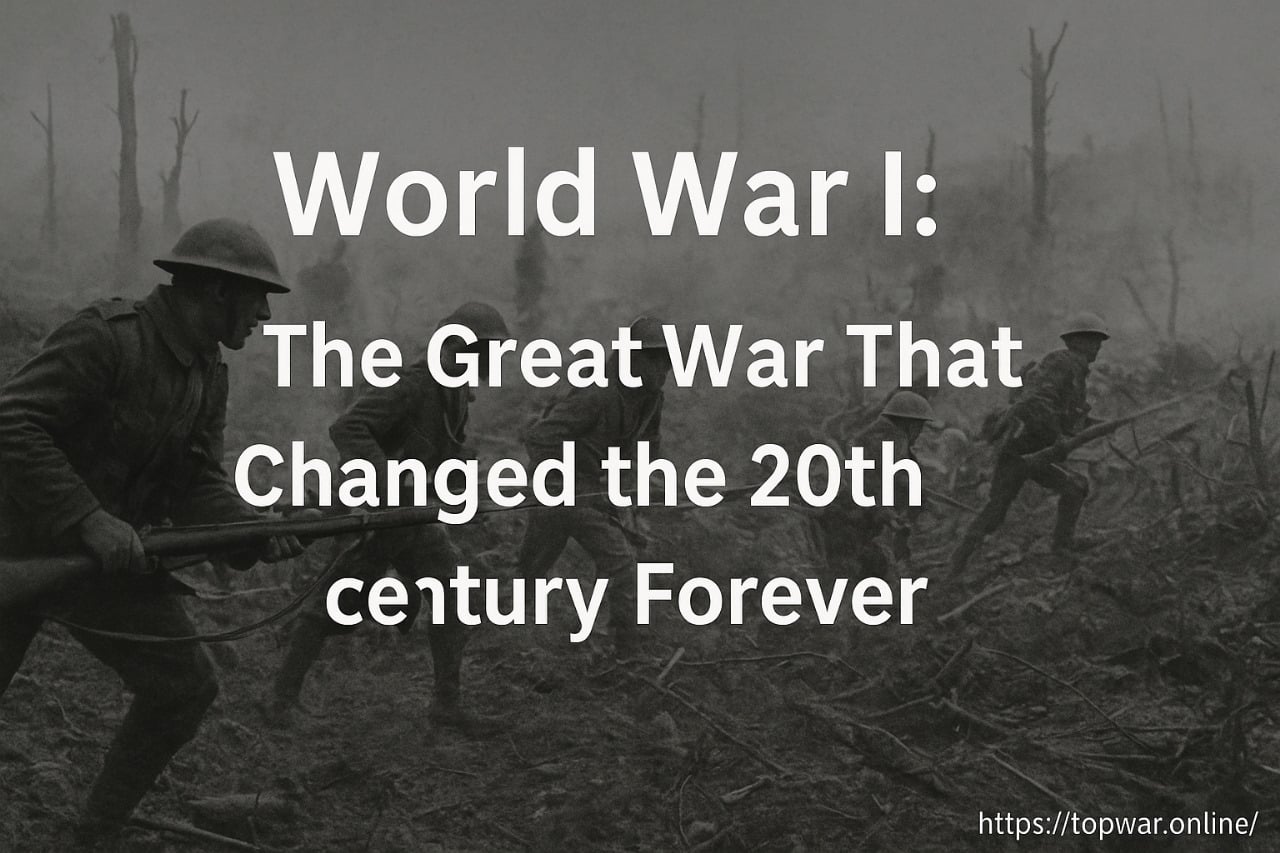
Trench warfare became the defining characteristic of World War I. Soldiers endured unimaginable conditions: mud, rats, disease, and constant shelling. Life in the trenches was grueling, with morale often low due to high casualty rates and inadequate supplies. Soldiers faced not only enemy fire but also psychological trauma, later recognized as “shell shock”.
The invention of new weapons such as poison gas, tanks, and machine guns revolutionized warfare. While these technologies increased lethality, they also highlighted the horrific human cost of industrialized conflict. Soldiers were forced to adapt to new strategies, yet survival was often a matter of luck as much as skill.
The Home Front: Societies Transformed by War
World War I was not only fought on the battlefield; it profoundly affected civilian life. Economies shifted to support war production, leading to labor shortages and rationing. Women entered the workforce in unprecedented numbers, taking on roles traditionally reserved for men, which laid the groundwork for social change and women’s suffrage in several countries.
Propaganda became a powerful tool to maintain morale and justify the war effort. Governments used posters, newspapers, and films to shape public opinion, creating an environment where dissent was often discouraged. The war also accelerated technological advancements, from aviation to medicine, with lasting impacts on post-war society.
The United States Enters the War
Initially neutral, the United States entered World War I in 1917 due to factors such as unrestricted submarine warfare by Germany and the Zimmermann Telegram, which proposed a German-Mexican alliance against the U.S. American troops and resources bolstered the Allied powers, providing a decisive edge that helped tip the war toward victory.
End of the War: Armistice and Treaty of Versailles
On November 11, 1918, an armistice ended the fighting, but peace negotiations were far from simple. The Treaty of Versailles (1919) imposed harsh penalties on Germany, including territorial losses, military restrictions, and reparations. While intended to secure lasting peace, the treaty fostered resentment and economic hardship, sowing seeds for World War II.
Other treaties reshaped Europe and the Middle East, creating new nations and redrawing borders. The League of Nations was established to prevent future conflicts, though it ultimately lacked the authority to enforce its goals.
Legacy of World War I: A Century-Defining Conflict
World War I fundamentally altered the 20th century. Empires collapsed, new nations emerged, and global power dynamics shifted. The war also influenced literature, art, and culture, inspiring works that captured the horrors and heroism of the time.
Militarily, it demonstrated the devastating potential of industrialized warfare, leading to changes in military strategy and technology. Politically, it led to revolutions, such as the Russian Revolution of 1917, which reshaped global ideologies and alliances. Socially, the war changed gender roles, labor dynamics, and national consciousness in profound ways.
Conclusion: Remembering the Great War
World War I remains one of the most significant events in modern history, not only for its immediate impact but also for its long-term consequences. It reshaped nations, transformed societies, and left lessons about the fragility of peace and the cost of global conflict. Remembering the Great War reminds us of the importance of diplomacy, international cooperation, and the enduring human desire for peace.
The legacy of World War I continues to resonate today, as nations reflect on the past to guide future decisions, ensuring that the sacrifices of millions of soldiers and civilians are never forgotten.