

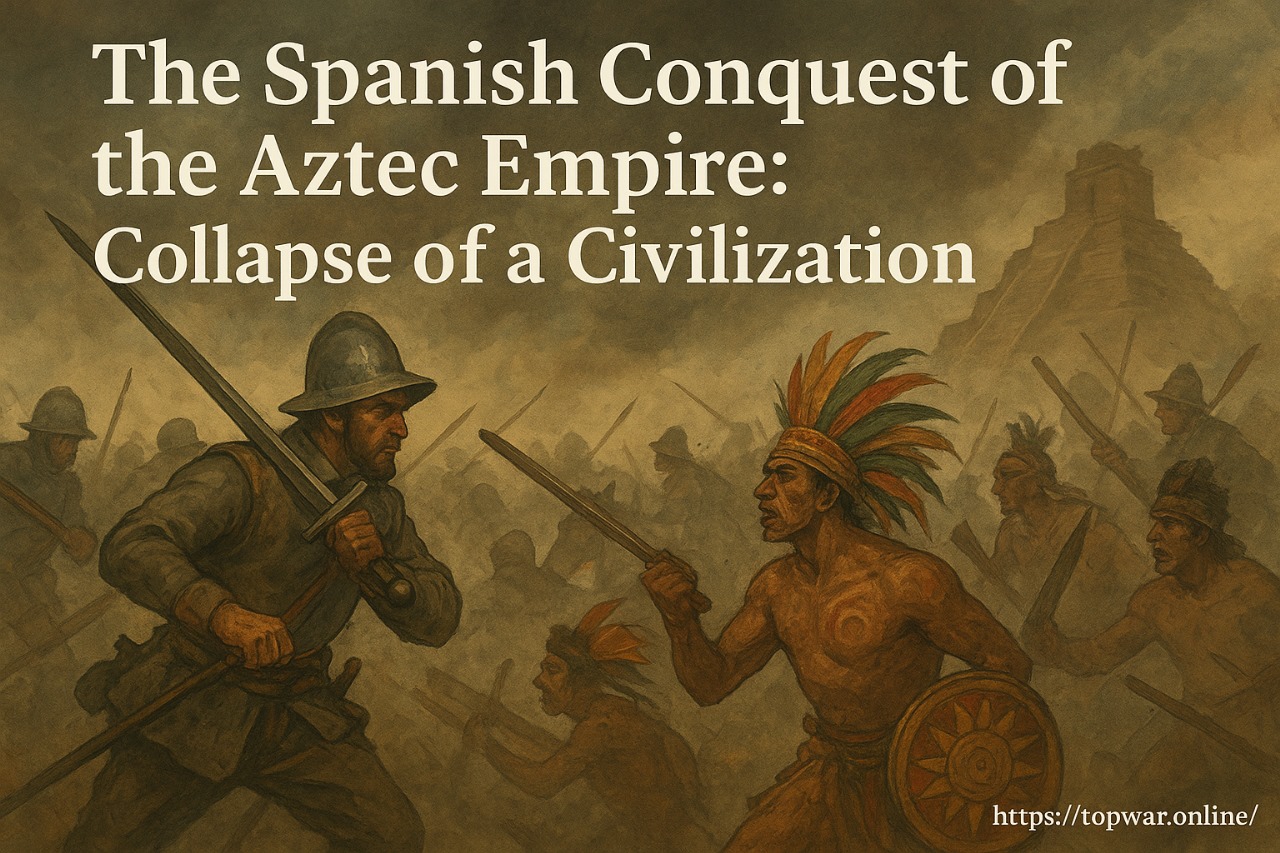
Part 1: Introduction and Context
The World Before the Spanish Arrival
Before the arrival of the Spanish in the early 16th century, Mesoamerica was a region of thriving civilizations, sophisticated urban centers, and complex political systems. The Aztec Empire, centered in the Valley of Mexico, represented the pinnacle of cultural, military, and economic achievement in central Mexico. While Europeans had developed cities, nations, and global trade, the Aztecs had constructed vast urban landscapes, intricate irrigation systems, and highly organized societies that rivaled contemporary European states in complexity. Their society was interconnected through trade networks, military alliances, and tribute systems that ensured the flow of resources and cultural exchange across the region. These civilizations were not static; they were dynamic, innovative, and adaptive, capable of great accomplishments in agriculture, architecture, governance, and religious practice.
Geography and Environment of the Aztec Empire
The Aztec Empire occupied the highlands of central Mexico, a region characterized by mountains, lakes, valleys, and fertile soil. The centerpiece was Lake Texcoco, on which the capital city of Tenochtitlán was constructed. The geography of the area allowed the Aztecs to develop unique agricultural methods, including chinampas, or floating gardens, which maximized arable land and supported dense urban populations. The surrounding mountains and lakes also provided natural defenses against invaders, creating a secure base from which the Aztec rulers could expand their influence. The climate, with distinct rainy and dry seasons, shaped agricultural cycles, trade, and the movement of people. The environment was both a source of sustenance and a determinant of political strategy, influencing settlement patterns, military campaigns, and urban planning.
Political Structure and Hierarchy
The Aztec Empire was a highly centralized and hierarchical society. At the apex was the emperor, or huey tlatoani, who held supreme authority over military, religious, and political affairs. Below him was a council of nobles and advisors, including military leaders, priests, and governors of subordinate territories. The empire extended through a combination of direct control and tribute from conquered city-states, creating a network of loyalty, obligation, and political integration. Each region had local rulers, but they were expected to provide military support, labor, and tribute to the central authority in Tenochtitlán. This complex political system enabled the Aztecs to manage a vast and diverse population while maintaining control over critical resources, trade routes, and urban centers.
Social Classes and Roles
Aztec society was organized into distinct social classes, each with specific responsibilities and privileges. At the top were the nobility, including royal family members, military commanders, and high priests. Nobles enjoyed wealth, land, and education and often served as administrators or military leaders. Below them were the commoners, who were primarily farmers, artisans, merchants, and laborers. These individuals supported the economy through agricultural production, craft specialization, and trade. At the bottom were slaves, often captured during warfare or born into servitude, who performed labor-intensive tasks. Despite this hierarchy, the society allowed for some social mobility, particularly through military achievement, religious dedication, or exceptional skill in trade or craftsmanship. This structure created a cohesive yet flexible society capable of sustaining a large empire.
Religion and Cosmology
Religion was central to Aztec life, influencing governance, warfare, agriculture, and daily practices. The Aztecs were polytheistic, worshiping a pantheon of gods associated with natural forces, war, fertility, and the sun. The sun god, Huitzilopochtli, played a particularly important role, and the Aztecs believed that human sacrifices were necessary to ensure cosmic balance and the continuation of life. Temples and ceremonial centers, such as the Templo Mayor in Tenochtitlán, were the focus of religious observance and political authority. Priests held considerable influence, interpreting omens, conducting rituals, and advising rulers. Religious ideology reinforced social hierarchies, justified military expansion, and guided the cultural identity of the Aztec people. Rituals, festivals, and sacrifices were not merely ceremonial; they were deeply entwined with governance, diplomacy, and the projection of imperial power.
Economy and Trade Networks
The Aztec economy was diverse and highly organized. Agriculture formed the backbone, with maize, beans, squash, and chilies as staple crops. Chinampas allowed intensive cultivation on lake surfaces, producing multiple harvests annually. Beyond subsistence, the Aztecs engaged in regional and long-distance trade, exchanging cacao, textiles, obsidian, feathers, and precious metals. Markets, such as the famous Tlatelolco market, facilitated commerce on a massive scale, bringing together goods, ideas, and people from across Mesoamerica. Tribute from conquered territories supplemented the economy, providing food, luxury items, labor, and military resources. Merchants, known as pochteca, acted as both traders and spies, gathering intelligence while maintaining commercial networks. This combination of agriculture, trade, and tribute allowed the Aztec Empire to sustain large urban populations, finance military campaigns, and support cultural and religious projects.
Military Organization and Warfare
The Aztecs were a formidable military power, structured to both defend the empire and expand it. Warriors were trained from a young age, with distinct ranks based on achievements in battle. The empire relied on a combination of foot soldiers, specialized units, and allies from conquered regions. Weapons included obsidian swords, spears, bows, and shields, which were effective in Mesoamerican combat. Warfare was not solely about conquest; it was also a religious duty, with captives often used for sacrificial purposes. Military campaigns were carefully planned, with reconnaissance, alliances, and siege techniques employed strategically. The military system reinforced political authority, ensured tribute compliance, and maintained the social order necessary for the empire’s survival.
Culture, Art, and Education
Aztec culture was rich in art, literature, and education. Codices, murals, and sculpture recorded history, religion, and daily life. Artisans specialized in pottery, featherwork, goldsmithing, and weaving, producing both utilitarian and ceremonial items. Education was mandatory for children, with separate instruction for nobles and commoners. Nobles were trained in leadership, religion, and administration, while commoners learned practical skills for trade, agriculture, or crafts. Music, dance, and storytelling played significant roles in ceremonies and social life, reinforcing cultural identity and transmitting knowledge across generations. The combination of education, artistry, and ritual practice created a highly cohesive and sophisticated society capable of both intellectual and practical achievement.
Population and Urban Life
Tenochtitlán, the Aztec capital, was one of the largest cities in the world at the time, with a population exceeding 200,000. The city featured canals, causeways, temples, palaces, and marketplaces, demonstrating advanced urban planning and engineering. Water management, transportation, and food distribution systems allowed the city to sustain large numbers of inhabitants. Life in Tenochtitlán was vibrant, with cultural, religious, and commercial activities integrated into the urban environment. The scale and complexity of the city reflected the organizational capabilities of the Aztec Empire and its ability to mobilize resources, labor, and technology on a grand scale.
Regional Influence and Diplomacy
The Aztec Empire extended its influence through a combination of military conquest, alliances, and diplomacy. Neighboring city-states were integrated into the empire through tribute agreements, marriage alliances, and military support obligations. Diplomacy and negotiation played critical roles in managing relationships with both subordinate states and distant powers. These networks of influence allowed the Aztecs to maintain stability, secure resources, and project power across a diverse and often fragmented landscape. The interplay of diplomacy, tribute, and coercion ensured the longevity and cohesion of the empire prior to the arrival of the Spanish.
Part 2: Early Spanish Exploration and Cortés’s Arrival
The Spanish Drive for Exploration
In the early 16th century, Spain was emerging as a dominant European power after completing the Reconquista and unifying under Ferdinand and Isabella. Motivated by wealth, religious zeal, and imperial ambition, Spanish explorers sought new territories across the Atlantic. The discovery of the Americas by Christopher Columbus in 1492 opened unprecedented opportunities for conquest, trade, and colonization. Spain’s monarchs were eager to expand their empire, spread Christianity, and claim resources such as gold, silver, and spices. This period of exploration was marked by both ambition and rivalry, with individual conquistadors competing for fame, fortune, and favor from the crown. The drive for exploration created a climate that enabled figures like Hernán Cortés to undertake audacious expeditions far from Europe.
Hernán Cortés: Early Life and Motivation
Hernán Cortés was born in 1485 in Medellín, Spain, to a noble family with modest means. He studied law at the University of Salamanca but soon abandoned academia for adventure in the New World. Cortés sailed to Hispaniola and later to Cuba, where he gained experience in colonial administration, military action, and trade. His ambitions were fueled by reports of wealthy indigenous civilizations on the mainland, particularly the Aztecs, who were rumored to possess vast quantities of gold and silver. Cortés combined personal ambition with a sense of divine mission, believing that conquering foreign lands was part of spreading Christianity and bringing glory to Spain. His intelligence, charisma, and tactical acumen would later enable him to navigate both the challenges of the New World and the complexities of indigenous politics.
Spanish Colonial Mindset
The Spanish approach to exploration was shaped by both ideology and practical concerns. Conquistadors believed in their cultural and religious superiority, viewing indigenous peoples as subjects to be converted or conquered. Papal bulls such as Inter caetera (1493) gave Spain legal and moral justification to claim territories in the Americas. Conquistadors sought to combine military conquest with evangelization, spreading Christianity while extracting wealth and resources. This dual mindset—both religious and economic—shaped strategies, alliances, and interactions with native populations. The Spanish were willing to employ diplomacy, deception, or outright violence to achieve their objectives, often exploiting internal divisions within indigenous societies.
Early Caribbean Expeditions
Before reaching Mexico, the Spanish had extensive experience in the Caribbean. Conquistadors established settlements in Hispaniola, Cuba, and Puerto Rico, often encountering indigenous resistance but also learning to manipulate alliances and exploit local resources. These early experiences taught the Spanish about the importance of forming strategic relationships with native populations, controlling food supplies, and utilizing local labor. The success and failures of Caribbean expeditions provided a blueprint for larger ventures on the mainland, including Cortés’s ambitious plan to explore and conquer the Aztec Empire.
Preparations for the Mexican Expedition
In 1519, Hernán Cortés received authorization from Diego Velázquez, the governor of Cuba, to lead an expedition to the mainland of Mexico. Cortés carefully assembled a force of approximately 500 men, including soldiers, sailors, and a small number of horses. He also secured cannons, firearms, and supplies necessary for sustained campaigns. Cortés recruited allies among other Spaniards seeking wealth and prestige, emphasizing loyalty, discipline, and strategic advantage. The preparation phase included gathering intelligence about the regions they would encounter, understanding local political structures, and identifying potential indigenous allies. Cortés’s meticulous planning set the stage for one of history’s most dramatic military campaigns.
Landing at Veracruz
Cortés and his fleet arrived on the eastern coast of modern-day Mexico, near present-day Veracruz, in April 1519. The landing marked the first significant Spanish incursion into mainland Mesoamerica. Upon arrival, Cortés established a fortified base and sought to assert authority by founding a town under Spanish law. He also sent messengers to nearby indigenous groups, offering alliances and presenting himself as a potential partner against the Aztecs. This careful combination of diplomacy and intimidation reflected Cortés’s understanding of both European and indigenous political realities. The landing at Veracruz was the first step in a campaign that would ultimately dismantle one of the most powerful civilizations in the Americas.
Initial Interactions with Indigenous Peoples
From the outset, Cortés engaged with indigenous communities to establish alliances and gather intelligence. He encountered the Totonacs, a local group subject to Aztec rule, who were eager to join forces with the Spanish to resist tribute demands. Cortés also met with the Tlaxcalans, fierce warriors who initially resisted the Spanish but eventually became critical allies. These interactions were complex, involving negotiation, demonstration of military power, and cultural interpretation. Cortés skillfully positioned himself as both a military partner and a potential ally in the eyes of various groups dissatisfied with Aztec dominance. These alliances not only bolstered his forces but also provided critical knowledge about the terrain, politics, and social structures of the region.
The Role of Malinche
Malinche, also known as Doña Marina, played a pivotal role in the Spanish conquest. A Nahua woman fluent in both Nahuatl and Mayan languages, she served as interpreter, advisor, and intermediary between Cortés and indigenous leaders. Her linguistic skills allowed the Spanish to communicate effectively, negotiate alliances, and gain crucial intelligence about political and military conditions. Malinche’s presence facilitated strategic manipulation of local rivalries and significantly enhanced the Spanish capacity to navigate the complex social landscape. Her role illustrates how individual agency, knowledge, and cultural mediation were as important as military technology in the conquest.
Spanish Perception of the Aztecs
Upon gathering intelligence from allied indigenous groups, Cortés learned of the Aztec Empire’s vast wealth, intricate social organization, and formidable military power. The Spanish perceived the Aztecs as both a threat and an opportunity. European accounts emphasized the grandeur of Tenochtitlán, the wealth of gold, and the ritual practices of the Aztecs, often interpreting them through a lens of religious and cultural superiority. Cortés recognized that direct confrontation without strategic alliances would be dangerous, leading him to carefully manipulate indigenous rivalries, employ diplomacy, and plan campaigns that maximized his tactical advantage. The combination of reconnaissance, observation, and strategic planning was essential for the subsequent stages of the conquest.
Strategic Planning and Early Skirmishes
Before advancing on Tenochtitlán, Cortés engaged in a series of small military campaigns to test the strength of local forces, secure supply lines, and demonstrate Spanish power. Skirmishes with hostile groups provided practical experience for Spanish soldiers and helped assess the effectiveness of European weapons and tactics against indigenous armies. Cortés also used these engagements to intimidate potential opponents and reinforce the impression of Spanish invincibility. These early actions were critical in establishing momentum, building confidence among allies, and preparing for the larger campaigns that would culminate in the siege of the Aztec capital.
Part 3: Initial Contact with the Aztec Empire
Approaching the Heart of the Empire
After forging alliances with the Totonacs and Tlaxcalans, Hernán Cortés prepared to advance toward the Aztec capital, Tenochtitlán. The journey through central Mexico was fraught with both logistical and strategic challenges. Dense forests, mountains, rivers, and hostile territories required careful planning. Cortés relied heavily on his indigenous allies for guidance, supplies, and intelligence about Aztec military strength and political dynamics. The Spanish were acutely aware that the Aztecs had created a sophisticated empire with formidable armies and tightly controlled tribute networks. This awareness informed Cortés’s strategy, emphasizing diplomacy, careful reconnaissance, and the use of alliances to compensate for the Spanish numerical disadvantage.
The Tlaxcalan Alliance
The Tlaxcalans were one of the most powerful indigenous groups in central Mexico, fiercely independent and long at odds with the Aztecs. Initially resistant to Spanish overtures, they tested the invaders in several skirmishes. Cortés skillfully demonstrated Spanish military capability, particularly the effectiveness of firearms, cavalry, and steel armor. Impressed and recognizing the potential to weaken the Aztecs, the Tlaxcalans agreed to ally with Cortés. This alliance proved critical; Tlaxcalan forces provided thousands of warriors, local knowledge, and logistical support. Without their assistance, the Spanish would have faced far greater difficulty navigating hostile territories and confronting the Aztec military.
Cultural Misunderstandings and Interpretations
Cortés and his companions were confronted with an unfamiliar and highly sophisticated civilization. The Aztecs’ intricate religious practices, monumental architecture, and political rituals were often misinterpreted through a European lens. Some Spanish believed Moctezuma II, the emperor, might be a god or a semi-divine figure, influenced by prophecies and the timing of the Spanish arrival. These perceptions affected Spanish strategy, encouraging a combination of diplomacy, caution, and psychological manipulation. The Spanish also misunderstood many aspects of Aztec social hierarchy, ceremonial obligations, and military protocols, which sometimes led to tension and miscommunication but also opened opportunities for exploitation.
Encounter with Moctezuma II
The first formal contact with the Aztec emperor, Moctezuma II, was a moment of immense political and symbolic significance. Moctezuma received the Spanish delegation with ceremony and caution, adhering to Aztec diplomatic traditions. He presented gifts of gold, textiles, and food, partly to demonstrate wealth and partly as a strategic attempt to pacify the newcomers. Cortés interpreted these offerings as signs of weakness and opportunity. Both sides engaged in cautious negotiation, assessing intentions and power. Moctezuma sought to preserve peace while understanding the nature of the Spanish threat, while Cortés aimed to assert dominance, gather intelligence, and prepare for eventual control of the capital.
Malinche’s Role in Diplomacy
During these interactions, Malinche’s linguistic and cultural skills were indispensable. She translated not only words but also conveyed nuance, context, and intentions, enabling Cortés to navigate complex Aztec protocols and avoid immediate conflict. Her advice helped the Spanish exploit internal divisions, such as rivalries among nobles, and reinforced alliances with groups opposed to Aztec dominance. Malinche’s role illustrates the crucial importance of cultural mediation and the often-overlooked agency of indigenous actors in the conquest. Through her guidance, the Spanish gained insight into both political structures and social customs, enhancing their strategic position.
Psychological Tactics and Strategic Manipulation
Cortés was adept at using psychological tactics to weaken Aztec authority before engaging in large-scale battles. By presenting himself as an ally to subject peoples and demonstrating the power of Spanish weapons, he created uncertainty and fear. He also leveraged the Aztec tradition of ritual and ceremony to his advantage, understanding that certain behaviors could be interpreted as divine or politically significant. These tactics were not merely opportunistic; they reflected a deep understanding of both European and indigenous perceptions of authority and power. By combining diplomacy, demonstration of force, and manipulation of local politics, Cortés set the stage for the eventual seizure of Tenochtitlán.
Early Skirmishes and Military Reconnaissance
Although diplomacy dominated initial contact, minor skirmishes occurred as the Spanish moved closer to the capital. These encounters allowed Cortés to test Aztec military responses, gather intelligence on fortifications, and gauge the effectiveness of Spanish arms against indigenous tactics. Observing the strengths and weaknesses of the Aztec forces, the Spanish adjusted strategies for the siege of Tenochtitlán. These early confrontations also served to intimidate local populations and demonstrate the power of the Spanish allies, reinforcing the perception of inevitable Spanish dominance.
Intelligence Gathering and Mapping
Cortés and his allies meticulously gathered intelligence on Tenochtitlán and surrounding regions. Detailed knowledge of the city’s layout, causeways, canals, marketplaces, and defensive structures became essential for planning the eventual conquest. Scouts and informants, both Spanish and indigenous, provided critical information on troop movements, resources, and political factions. This intelligence allowed the Spanish to identify strategic points of leverage, such as influential nobles or areas vulnerable to attack. The combination of observation, local knowledge, and careful record-keeping illustrates the methodical approach the Spanish used to overcome a vastly larger and sophisticated enemy.
Religious and Cultural Observations
The Spanish were both fascinated and disturbed by Aztec religious practices. Human sacrifice, ritual ceremonies, and the prominent role of temples challenged European sensibilities and justified, in the Spanish mindset, the conquest and conversion mission. Spanish chroniclers described the Templo Mayor, elaborate festivals, and sacred precincts in great detail, emphasizing both the grandeur and perceived “barbarity” of the Aztec system. These observations served multiple purposes: they informed strategic decisions, influenced European perceptions, and reinforced the ideological rationale for conquest, portraying the Aztecs as both wealthy and morally corrupt, needing European intervention.
The Strategic Approach to Tenochtitlán
As Spanish forces approached Tenochtitlán, Cortés balanced caution with audacity. He needed to maintain alliances, minimize premature conflict, and position his forces advantageously. The Spanish occupation of nearby settlements, diplomatic engagement with tributary states, and careful reconnaissance of the capital created a network of control that weakened the Aztec ability to respond effectively. Cortés understood that seizing the city required not only military action but also psychological dominance, control of key allies, and manipulation of internal divisions. These preparations laid the foundation for the siege and eventual fall of the Aztec capital.
Part 4: Political Intrigue and Alliances
Aztec Imperial Structure and Vulnerabilities
The Aztec Empire was a collection of tributary city-states governed from the capital, Tenochtitlán. While the emperor wielded considerable power, his authority depended on compliance from subject states, many of which resented the demands for tribute, human sacrifices, and military conscription. These resentments created internal vulnerabilities. Cortés quickly recognized that the empire’s stability relied not solely on military might but on political cohesion and loyalty among its vassals. By understanding these dynamics, the Spanish were able to cultivate alliances with disaffected groups, undermining the Aztec emperor’s control and creating a network of support that extended deep into the empire’s territory.
Exploiting Discontent Among Subject Peoples
Many city-states under Aztec control, including the Tlaxcalans, Huexotzincas, and Totonacs, suffered under the demands of tribute and military service. Cortés presented himself as a liberator, promising freedom from Aztec oppression while offering military support. These promises were politically advantageous: they encouraged subject peoples to provide troops, supplies, and intelligence, significantly amplifying the Spanish forces. The ability to exploit such discontent demonstrates Cortés’s political acumen. By turning local populations against the Aztec leadership, he destabilized the empire without the need for immediate large-scale conflict, effectively using internal divisions as a force multiplier.
The Tlaxcalan Alliance and Military Support
The alliance with the Tlaxcalans proved decisive in the Spanish campaign. Initially, the Tlaxcalans engaged the Spanish in combat to assess their strength. Cortés demonstrated superior weaponry and battlefield tactics, impressing the Tlaxcalan leaders. Recognizing the strategic opportunity to weaken their long-time rivals, the Tlaxcalans formally allied with the Spanish. They contributed thousands of warriors, knowledge of the terrain, logistical support, and political counsel. This partnership allowed the Spanish to approach Tenochtitlán with a combined force far larger than their original contingent, making what would have been an impossible conquest achievable.
Diplomacy and Negotiation with Aztec Nobility
Cortés used diplomacy to manipulate factions within the Aztec nobility. Some nobles resented Moctezuma II’s policies or feared the emperor’s wrath in times of crisis. The Spanish identified and courted these factions, promising protection or favor in exchange for cooperation. By securing the loyalty—or at least the neutrality—of certain nobles, Cortés weakened Moctezuma’s authority and created opportunities for political disruption. These maneuvers were subtle yet effective, illustrating the Spanish mastery of psychological and political strategy. The conquest was not simply a military endeavor but also a calculated campaign to fracture the internal cohesion of the Aztec state.
Use of Hostages and Symbolic Authority
One of Cortés’s most audacious strategies was the capture of Moctezuma II, which functioned as both a hostage tactic and a means of symbolic control. By holding the emperor under Spanish supervision, Cortés could influence the actions of the Aztec elite and direct compliance from subordinate regions. While this tactic caused tension and confusion among the Aztec population, it also allowed the Spanish to assert dominance without immediate large-scale bloodshed. The use of hostages in political strategy highlights the combination of psychological manipulation and military authority that characterized the Spanish approach to conquest.
Alliance Networks Across the Valley of Mexico
Cortés extended alliances beyond the Tlaxcalans to other groups, including the Totonacs and Huexotzincas. These alliances provided critical access to food, labor, and strategic intelligence. Each allied city-state offered unique advantages, from knowledge of local geography to military contingents and logistical support. By building a coalition of indigenous allies, Cortés created a web of influence that encircled Tenochtitlán and isolated the capital from potential reinforcements. This network of alliances allowed the Spanish to act decisively, even when vastly outnumbered in absolute terms, demonstrating the power of political strategy alongside military tactics.
Manipulating Aztec Religious Beliefs
Cortés understood the role of religion in Aztec society and skillfully exploited it for strategic advantage. By portraying himself and his allies as potentially divine or as agents of powerful forces, he created hesitation and uncertainty among both rulers and commoners. Reports of omens, eclipses, and celestial phenomena were interpreted by the Spanish to reinforce the notion of their inevitability and divine favor. The psychological effect of this manipulation weakened Aztec resistance and enhanced the credibility of Spanish authority. Religion, therefore, became not only a cultural factor but also a tactical instrument in the conquest.
Internal Rivalries and Political Fragmentation
The Aztec Empire, while formidable, was not monolithic. Regional governors and subordinate leaders often pursued personal ambitions, competing for power, tribute, and influence. Cortés recognized that these internal rivalries could be leveraged to Spanish advantage. By promising rewards or protection, he encouraged nobles to prioritize their own survival or gain over loyalty to Moctezuma II. The fragmentation of authority within the empire allowed the Spanish to systematically undermine central control, weakening the capacity of the Aztec state to coordinate an effective response to the invasion.
Strategic Occupation of Key Locations
Before marching directly on Tenochtitlán, Cortés strategically occupied surrounding towns, trade routes, and resource hubs. These occupations served multiple purposes: they secured supply lines, prevented reinforcements from reaching the capital, and demonstrated Spanish military presence to both allies and adversaries. By controlling key geographic points, the Spanish created a network of operational bases that facilitated communication, coordination, and movement of troops. The strategic placement of forces reflected a deep understanding of both terrain and political geography, further amplifying Spanish leverage over the Aztec Empire.
The Role of Intelligence and Espionage
Intelligence gathering was central to Cortés’s strategy of political manipulation. Scouts, allied indigenous leaders, and even captured messengers provided detailed information about troop movements, city defenses, and political alliances. This intelligence allowed the Spanish to anticipate resistance, exploit weaknesses, and apply pressure where it would be most effective. Cortés effectively combined human intelligence with direct observation and consultation with allies, creating a comprehensive understanding of the Aztec political and military landscape. Espionage became as vital as open warfare in the conquest strategy.
Psychological Warfare and the Threat of Violence
Cortés and his allies utilized the threat of violence as a psychological tool to induce compliance and preempt resistance. Displays of Spanish weaponry, cavalry, and firearms intimidated local populations, creating an aura of invincibility. The calculated use of force and the reputation for brutality encouraged submission without immediate combat, further undermining the cohesion of Aztec authority. This combination of intimidation, diplomacy, and strategic alliances exemplifies the multi-faceted approach that made the conquest feasible despite the Spaniards’ limited numbers.
Part 5: Military Campaigns
The March to Tenochtitlán
After consolidating alliances with the Tlaxcalans, Totonacs, and other subject peoples, Hernán Cortés began the march toward Tenochtitlán, the Aztec capital. This journey was both a military and logistical challenge. The Spanish and their allies had to traverse dense forests, mountains, rivers, and lakes while maintaining supply lines and communication networks. The march was carefully planned to avoid overextension and to maintain the support of indigenous allies. Cortés used intelligence gathered from local informants to map routes, identify potential ambush sites, and determine the positions of Aztec garrisons along the way. Every step of the advance reflected meticulous planning and strategic foresight.
Battles in Tlaxcala and Cholula
Before reaching the capital, Cortés engaged in critical battles with hostile indigenous groups, notably the Tlaxcalans and the city of Cholula. Initially, the Tlaxcalans resisted Spanish advances, but after skirmishes demonstrating Spanish military superiority, they became allies. The battle in Cholula was a decisive and controversial event. The Spanish, suspecting a plot against them, launched a surprise attack that resulted in widespread slaughter. This action, while brutal, sent a clear message of Spanish power and intimidated other communities. These campaigns combined military force with strategic diplomacy, paving the way for unopposed access to Tenochtitlán.
Siege Tactics and Urban Warfare
Tenochtitlán presented unprecedented military challenges. Built on an island in Lake Texcoco, the city was surrounded by causeways and canals, making conventional assault difficult. Cortés and his allies employed a combination of siege tactics, naval control, and strategic positioning. They constructed brigantines, small Spanish-style ships, to navigate the canals and control water access. Causeways were fortified or destroyed to channel Aztec movements. The siege involved cutting off supplies, isolating districts, and creating psychological pressure through constant threat of attack. Urban warfare was intense, with fighting in streets, marketplaces, and temples, requiring coordination between Spanish soldiers and thousands of indigenous allies.
Weapons, Armor, and Military Technology
Spanish military technology provided a decisive advantage. Steel swords, crossbows, lances, and early firearms were unfamiliar to the Aztecs, who relied on obsidian blades, wooden shields, and traditional spears. Horses added mobility and shock value, amplifying the psychological impact of the Spanish forces. Armor protected soldiers from traditional weapons, while cannons and arquebuses disrupted Aztec formations and created fear. The combination of technology, training, and tactical discipline allowed a small Spanish force to confront and defeat numerically superior Aztec armies. Indigenous allies also contributed their weapons, knowledge of terrain, and tactical expertise, creating a hybrid force uniquely suited to the campaign.
Role of Disease in Military Campaigns
Disease played a crucial, albeit unintentional, role in weakening Aztec resistance. Smallpox, introduced by European contact, spread rapidly among indigenous populations, causing massive mortality. Soldiers, civilians, and rulers alike were affected, leading to social disruption and diminished military capability. The epidemic created fear and confusion, further undermining the ability of Aztec forces to mount coordinated defense. While disease was not a deliberate weapon, its impact was as significant as any battle, illustrating how biological factors intertwined with military strategy to determine the outcome of conquest.
The Fall of Aztec Strongholds
During the campaign, key Aztec strongholds were systematically targeted. Cities such as Cempoala, Texcoco, and other surrounding towns were captured or neutralized through a combination of direct assault, diplomacy, and intimidation. Each victory weakened the Aztec capacity to resist, cut off reinforcements, and reinforced Spanish authority. These operations demonstrated the effectiveness of combined arms, strategic alliances, and psychological tactics. The systematic dismantling of peripheral power centers allowed the Spanish to focus their efforts on Tenochtitlán, confident that other areas would not launch coordinated counterattacks.
The Siege of Tenochtitlán
The siege of Tenochtitlán, which culminated in 1521, was the decisive moment of the conquest. Spanish forces, aided by thousands of indigenous allies, encircled the city, controlling access via causeways and waterways. They cut off food and water supplies, bombarded strategic districts, and conducted targeted assaults on temples and government buildings. Urban combat was brutal, with fighting occurring in streets, canals, and public squares. The siege lasted several months, and the combination of starvation, disease, and constant military pressure gradually eroded Aztec resistance. By the time the city fell, much of its population had been decimated, and the political structure of the empire had collapsed.
Key Battles and Turning Points
Several key battles determined the outcome of the campaign. The capture of Moctezuma II temporarily destabilized the city’s leadership. Skirmishes on the causeways and canals disrupted Aztec troop movements. Spanish brigantines controlled lake access, preventing reinforcements. Psychological warfare, including demonstrations of weapon power and the terror caused by horses, created confusion and fear among defenders. Each of these elements contributed to a series of turning points that ultimately led to the surrender of Tenochtitlán. The conquest was not the result of a single battle but a carefully orchestrated sequence of military and political maneuvers.
Integration of Indigenous Allies in Combat
Indigenous allies played a central role in military operations. Tlaxcalan warriors, Totonac soldiers, and other allied groups formed the bulk of the fighting force, providing manpower, local knowledge, and specialized combat skills. Their participation was motivated by resentment of Aztec rule, promises of rewards, and strategic calculation. These allies were instrumental in both siege operations and open-field engagements, allowing the Spanish to amplify their limited numbers and sustain prolonged campaigns. The success of the Spanish relied heavily on this coalition, demonstrating the complex interplay of European and indigenous forces in the conquest.
Psychological Impact on Aztec Society
The relentless military campaign, combined with disease and the presence of foreign allies, had profound psychological effects on the Aztec population. Fear, uncertainty, and the collapse of political authority eroded morale. The perception of Spanish invincibility and divine favor contributed to surrender and compliance in key areas. The use of terror as a tactical instrument, including public displays of military might and execution of perceived traitors, further undermined resistance. These psychological factors were as decisive as the physical confrontations themselves, illustrating the multidimensional nature of the conquest.
Aftermath of the Campaign
By the end of the military campaigns, the Aztec Empire had been effectively dismantled. Tenochtitlán lay in ruins, thousands of inhabitants had perished, and the political hierarchy had been eliminated or subordinated. Spanish forces and indigenous allies began the process of establishing colonial administration, reorganizing social structures, and consolidating control over the region. The conquest created the conditions for the imposition of Spanish law, religion, and economic systems, marking a profound transformation in Mesoamerican history.
Part 6: Epidemics and Social Collapse
Introduction: The Unseen Enemy
While Spanish weaponry, strategy, and alliances played critical roles in the conquest of the Aztec Empire, an invisible force—the spread of European diseases—proved equally decisive. Smallpox, measles, and influenza, introduced inadvertently by European explorers, swept through Mesoamerica with catastrophic consequences. These diseases struck populations with no prior exposure, leaving them immunologically defenseless. Mortality rates were staggering, often eliminating entire families, communities, and local leadership. Disease disrupted social structures, weakened armies, and eroded the morale of both urban and rural populations. In many ways, epidemics were as lethal as the military campaigns themselves, shaping the trajectory of conquest in ways the Spanish neither fully understood nor intentionally planned.
Smallpox and Its Devastation
Smallpox emerged as the most devastating disease during the conquest. First reported in 1520, it spread rapidly across densely populated urban centers and rural communities alike. Tenochtitlán, with its crowded neighborhoods, marketplaces, and canals, became particularly vulnerable. High mortality rates struck indiscriminately, killing nobles, priests, soldiers, and commoners. Moctezuma II himself fell victim to illness during this period, further destabilizing leadership. The sudden loss of life created panic, fear, and confusion, undermining the ability of the Aztec state to coordinate military defenses and civil administration. Smallpox acted as a force multiplier for the Spanish, weakening resistance long before key battles occurred.
Impact on Military Resistance
The spread of disease significantly reduced the effectiveness of Aztec armies. Experienced warriors succumbed to illness, leaving inexperienced recruits to fill their ranks. Entire units were rendered incapable of combat due to widespread sickness. In addition to physical weakening, the psychological toll of witnessing death on a massive scale undermined morale and resolve. Aztec commanders faced the impossible challenge of maintaining discipline, organizing defenses, and planning offensives while their forces were decimated by an invisible enemy. Disease, therefore, functioned as an indirect but decisive weapon, compounding the strategic advantages already held by the Spanish and their allies.
Social Disruption and Collapse
Beyond its impact on military capabilities, disease triggered profound social disruption. Families were torn apart as parents, elders, and children died in large numbers. Traditional religious practices and communal rituals were interrupted, temples and ceremonial centers became depopulated, and local economies collapsed. Agricultural production suffered as farmers and laborers perished, leading to food shortages and famine. Social hierarchies were destabilized, as noble families lost members critical to governance, diplomacy, and military leadership. The fabric of Aztec society was unraveling, leaving communities vulnerable to both internal unrest and external conquest.
Psychological and Cultural Effects
The psychological impact of epidemics on the Aztec population cannot be overstated. In a society deeply intertwined with religion and cosmology, disease was often interpreted as a sign of divine displeasure or cosmic imbalance. Panic and superstition spread alongside the illnesses themselves. Temples and religious leaders struggled to maintain authority as rituals failed to prevent death and suffering. Fear and hopelessness permeated urban and rural communities alike, further reducing the willingness of populations to resist the Spanish invaders. The combination of disease and psychological trauma amplified the effectiveness of Spanish military and political strategies.
Demographic Collapse and Long-Term Consequences
The demographic collapse caused by disease was staggering. Estimates suggest that up to 80–90% of the indigenous population in central Mexico perished within decades of initial European contact. Entire towns and villages were depopulated, agricultural systems were disrupted, and traditional knowledge and cultural practices were lost. This demographic catastrophe facilitated the establishment of Spanish colonial rule by drastically reducing the number of people capable of resisting or organizing opposition. The collapse of population centers also enabled the Spanish to repurpose land, labor, and resources for colonial administration and economic exploitation.
Interaction with Military Campaigns
Epidemics and military campaigns were deeply intertwined. The spread of disease often preceded or coincided with battles, weakening defenders and creating opportunities for Spanish forces to strike with minimal resistance. Conversely, the movement of Spanish troops, along with their indigenous allies, facilitated the spread of pathogens to new areas. This dynamic created a feedback loop in which disease amplified military success, and military campaigns accelerated the spread of disease. The synergy of biological and military factors contributed decisively to the rapid collapse of the Aztec Empire.
The Role of Allies in Epidemic Response
Indigenous allies of the Spanish were also affected by epidemics, though their proximity to European centers and exposure patterns varied. The Tlaxcalans, Totonacs, and other groups experienced disease outbreaks, which sometimes hindered their ability to contribute militarily. However, their decentralized political structures and strategic positioning allowed many of these allies to recover more quickly than urban Aztec populations. This contrast between the impact on centralized versus decentralized societies illustrates how disease amplified existing political and social vulnerabilities within the Aztec Empire.
Religious Interpretation and Moral Justification
Spanish chroniclers often interpreted the impact of disease as evidence of divine favor, viewing epidemics as a providential tool aiding the conquest. In European narratives, the rapid spread of disease validated the righteousness of Spanish intervention and the inevitability of Aztec defeat. While such interpretations were biased and Eurocentric, they highlight how disease became integrated into the ideological framework of conquest, reinforcing Spanish authority and providing moral justification for the subjugation of indigenous peoples.
Legacy of Epidemics
The epidemics that accompanied the Spanish conquest had long-lasting consequences. Beyond immediate mortality, they reshaped settlement patterns, labor systems, and social hierarchies. They facilitated Spanish colonial exploitation by reducing resistance, altering land use, and concentrating survivors in Spanish-controlled centers. Cultural transmission, oral traditions, and indigenous knowledge were severely disrupted, leaving lasting gaps in historical memory. The demographic and social consequences of disease became foundational to the establishment of colonial Mexico, influencing economic structures, cultural adaptation, and the trajectory of indigenous societies for centuries.
Part 7: Fall of Tenochtitlán
Prelude to the Final Siege
By 1521, Hernán Cortés and his allies had systematically isolated Tenochtitlán. Surrounding towns had been conquered or aligned with the Spanish, and the strategic network of causeways, canals, and water routes was under Spanish control. The combination of military pressure, disease, and alliances with subject peoples left the Aztec capital vulnerable. Cortés understood that a direct assault required careful planning, as the city’s defenses—including fortified causeways, canals, and massive stone structures—posed significant challenges. He employed a combination of siege tactics, psychological warfare, and military engineering to prepare for the final assault.
The Role of Indigenous Allies
Thousands of indigenous warriors from Tlaxcala, Totonac, and other allied groups participated in the siege. These allies were critical in maintaining pressure on multiple fronts, controlling access points, and supplementing Spanish forces. Their intimate knowledge of local terrain and Aztec military practices provided strategic advantages that the Spanish alone could not achieve. Cortés coordinated their movements, integrating them into combined operations with Spanish soldiers and artillery. The loyalty and contribution of these allies were decisive in the prolonged siege of the island city.
Control of Causeways and Canals
Tenochtitlán’s island location made access extremely difficult. The city was connected to the mainland by narrow causeways, which the Spanish systematically destroyed or fortified to control movement. Canals were navigated by Spanish brigantines, which patrolled the waters and disrupted Aztec supply lines. By controlling both land and water routes, the Spanish isolated the city, preventing reinforcements and limiting access to food and other essential resources. This strategy effectively strangled the city and demonstrated the Spanish understanding of combined naval and terrestrial operations.
Urban Combat and Tactical Challenges
The siege involved intense urban combat. Spanish forces, equipped with steel weapons, firearms, and cavalry, confronted Aztec warriors in streets, marketplaces, and residential districts. Fighting was brutal and chaotic, with both sides suffering heavy casualties. The Aztecs employed their knowledge of the city’s layout, using canals, buildings, and elevated platforms to mount ambushes and defend strategic points. The Spanish adapted quickly, coordinating infantry, artillery, and indigenous allies to systematically capture sections of the city. Urban warfare required exceptional discipline, coordination, and improvisation, highlighting the complexity of the final conquest.
Psychological Warfare and Intimidation
Cortés and his allies employed psychological tactics to demoralize defenders. The display of firearms, cavalry, and cannons created fear and confusion, while the presence of allied indigenous forces signaled internal divisions within the empire. The Spanish also executed captured leaders or prominent figures to instill terror. Propaganda and rumor further undermined morale, contributing to a sense of inevitability regarding the city’s fall. These psychological factors were as influential as military engagements in weakening Aztec resistance and hastening surrender.
Starvation and Disease During the Siege
As the siege progressed, starvation and disease ravaged the population. Food supplies were cut off, water access was restricted, and smallpox continued to decimate residents. Civilians and warriors alike succumbed to illness, creating chaos and reducing the capacity for organized defense. The combination of physical deprivation and psychological strain created conditions in which even highly trained warriors could not sustain prolonged resistance. The siege became as much a battle against circumstance as against enemy forces.
Moctezuma II and Leadership Collapse
The death of Moctezuma II during the early stages of the siege further destabilized the city. Leadership passed to Cuitláhuac and later Cuauhtémoc, both of whom demonstrated courage and tactical skill, but were hampered by dwindling forces, disease, and famine. The successive loss of leaders eroded organizational coherence and undermined morale. The absence of central authority prevented coordinated strategies, leaving the population and defenders vulnerable to the combined pressures of military assault, starvation, and disease.
Final Assaults and Breaching the City
In the closing stages of the siege, Spanish forces launched coordinated assaults on critical districts. Brigantines controlled the canals, while infantry and indigenous allies attacked streets, plazas, and temples. Key structures, including the Templo Mayor, were targeted to break the symbolic and practical heart of the city. Fighting was fierce, with street-by-street combat and resistance from remaining Aztec warriors. Despite heavy casualties, the Spanish and their allies gradually gained control, exploiting weaknesses, using artillery bombardment, and leveraging intelligence from insiders to capture key points.
Surrender and Capture of Cuauhtémoc
The final surrender came in August 1521. Cuauhtémoc, the last Aztec emperor, was captured, signaling the formal end of Aztec political authority. Surviving defenders and civilians were either killed, enslaved, or assimilated into Spanish-controlled systems. The surrender marked not only the fall of Tenochtitlán but also the collapse of the centralized Aztec state. Spanish control over the capital and surrounding regions allowed them to impose new political structures, redistribute land, and integrate indigenous allies into colonial administration.
Destruction and Transformation of Tenochtitlán
Following the conquest, Tenochtitlán was systematically destroyed and rebuilt as Mexico City, the capital of New Spain. Temples were dismantled, palaces repurposed or razed, and the urban landscape was reorganized according to Spanish colonial principles. Churches were constructed on former temple sites, symbolizing religious and political domination. The transformation of the city represented the physical and cultural replacement of Aztec civilization with Spanish colonial authority. It also facilitated control over trade, administration, and population centers in the region.
Immediate Consequences for the Aztec Population
The fall of Tenochtitlán had devastating consequences for the Aztec population. Tens of thousands were killed during the siege, while many more died from disease, starvation, or enslavement. Social hierarchies were dismantled, and traditional governance structures were replaced by Spanish colonial administration. Cultural practices, religious ceremonies, and economic systems were disrupted or forbidden. Survivors were often forced to assimilate into the new social order, contributing labor, knowledge, and resources to the Spanish colonial system. The demographic, social, and cultural consequences of the city’s fall were profound and long-lasting.
Historical Significance of the Fall
The fall of Tenochtitlán marked one of the most significant events in the history of the Americas. It represented the collapse of a highly sophisticated empire, the integration of Mesoamerica into the Spanish colonial system, and the beginning of profound cultural, demographic, and economic transformations. The conquest reshaped political authority, land ownership, religious practice, and social organization across central Mexico. The fall also demonstrated the interplay of military strategy, political alliances, disease, and psychological factors in determining the outcome of historical events, providing a case study in the complexity of imperial conquest.
Part 8: Establishment of Spanish Rule and Colonial Transformation
Immediate Consolidation of Power
Following the fall of Tenochtitlán in 1521, Hernán Cortés and his Spanish forces faced the critical task of consolidating control over the former Aztec Empire. The Spanish imposed a military and administrative presence to prevent rebellion, maintain order, and ensure the loyalty of both indigenous allies and surviving Aztec subjects. Key strategic locations, such as former temples, plazas, and palaces, were secured to serve as centers of colonial authority. Spanish soldiers, supported by indigenous allies, were stationed throughout the region to enforce compliance and deter uprisings. This initial consolidation laid the foundation for the broader political transformation of central Mexico.
Reorganization of Political Structures
The centralized Aztec government was dismantled, and Spanish colonial administration was introduced. Local nobles who survived the conquest were co-opted into the colonial system as intermediaries, tasked with collecting tribute, maintaining order, and enforcing Spanish law. New administrative divisions, such as cabildos (municipal councils) and encomiendas (land grants tied to labor obligations), were implemented to manage resources and population. The Spanish also introduced European legal and bureaucratic frameworks, gradually replacing indigenous governance while exploiting existing social hierarchies to facilitate control. This blending of indigenous authority and Spanish oversight became a hallmark of colonial rule.
Religious Transformation and the Role of the Church
Religion played a central role in the Spanish consolidation of power. Catholic missionaries, primarily Franciscans, Dominicans, and Augustinians, were deployed to convert the indigenous population. Temples were destroyed or repurposed as churches, and religious festivals were replaced with Christian rituals. Indigenous priests were often trained or coerced to participate in the new religious system. The imposition of Catholicism served both ideological and practical purposes: it reinforced Spanish authority, legitimized colonial rule, and sought to erase the cultural and religious foundations of the Aztec Empire. Over time, a syncretic culture emerged, blending indigenous and European religious practices, but initially, the transformation was marked by coercion and upheaval.
Economic Exploitation and the Encomienda System
The Spanish introduced the encomienda system, granting conquistadors and loyal allies control over land and labor. Indigenous populations were required to provide tribute, labor, and resources to their Spanish overlords. This system extracted wealth from former Aztec territories while restructuring the economy to serve colonial interests. Agriculture, trade, and resource extraction were redirected toward Spanish priorities, including the production of food, textiles, and precious metals for export. While some indigenous elites retained positions of influence, the broader population experienced significant disruption to traditional economic practices, land tenure, and social organization.
Population Resettlement and Urban Planning
Tenochtitlán was rebuilt as Mexico City, a model colonial city reflecting European urban planning principles. Streets were reorganized, public squares were constructed, and administrative and religious buildings replaced former Aztec structures. Indigenous populations were often resettled into newly organized barrios, allowing the Spanish to monitor and control labor and movement more effectively. This urban transformation facilitated the integration of indigenous communities into the colonial system and symbolized the physical and cultural domination of the Spanish over the former Aztec capital.
Cultural Assimilation and Resistance
Spanish authorities implemented policies aimed at assimilating indigenous populations into European culture, including language instruction, dress codes, and religious education. However, resistance persisted through both overt and covert means. Indigenous communities continued to practice traditional customs in private, and uprisings occasionally erupted, reflecting the tension between imposed colonial structures and enduring native identity. Over generations, a complex interplay of adaptation, syncretism, and resistance shaped the cultural landscape of central Mexico, creating a new society that incorporated elements of both Aztec and Spanish heritage.
Redistribution of Land and Resources
The conquest enabled the Spanish to redistribute land and resources to reward soldiers, allies, and administrators. Large estates were established for agriculture and mining, often exploiting indigenous labor. Sacred spaces, including temples and ceremonial centers, were appropriated or destroyed to assert Spanish dominance. Natural resources such as lakes, forests, and mineral deposits were placed under colonial control, transforming the economic foundation of the region. The redistribution of land not only enriched the Spanish elite but also weakened indigenous social structures by removing control over ancestral territories.
Integration of Indigenous Allies
Indigenous allies who had supported Cortés, including the Tlaxcalans and Totonacs, were integrated into the new colonial system. They were granted privileges, lands, and positions of authority in recognition of their loyalty. These alliances ensured continued stability and facilitated Spanish administration by leveraging local knowledge and authority. However, these arrangements also created new hierarchies and rivalries, as some groups benefited while others remained subordinated. The integration of allies highlights the complex social engineering employed by the Spanish to solidify control over a diverse and formerly autonomous population.
Education, Language, and Legal Systems
The Spanish introduced European education and language policies to reshape society. Missionaries and colonial officials taught Spanish language, literacy, and Catholic doctrine to indigenous populations. Legal systems were implemented to formalize Spanish authority and regulate social, economic, and political interactions. While these measures often disrupted traditional governance and cultural practices, they also facilitated communication, record-keeping, and administration across the colony. Over time, these systems created a hybrid society in which indigenous and European practices coexisted, sometimes in tension, but increasingly under Spanish oversight.
Long-Term Societal Transformation
The consolidation of Spanish rule initiated profound and long-lasting changes in Mesoamerican society. Political authority, economic systems, religious practices, urban landscapes, and social hierarchies were reconfigured to serve colonial interests. Indigenous populations were drastically reduced due to disease and warfare, while survivors adapted to new social structures. Over generations, a new colonial society emerged, blending elements of Spanish and indigenous culture, but rooted in the dominance and control established during the immediate post-conquest period. The transformation of the former Aztec Empire illustrates how conquest, administration, and cultural imposition reshaped an entire civilization.
Part 9: Legacy of the Conquest
Demographic and Population Changes
The Spanish conquest caused a profound demographic shift in central Mexico. Disease, warfare, and famine decimated the indigenous population, reducing numbers by an estimated 80–90% within decades. Entire communities disappeared, and surviving populations were resettled or reorganized under Spanish colonial administration. This demographic collapse altered social structures, labor systems, and settlement patterns, creating conditions for Spanish dominance. Over generations, the population stabilized, but the scale of loss left a lasting imprint on family structures, community networks, and traditional governance.
Cultural Transformation
The cultural legacy of the conquest was immense. Aztec religious practices were suppressed or adapted into Christian frameworks, while European customs, language, and education were introduced. Indigenous art, architecture, and literature were influenced by Spanish styles, creating a hybrid cultural expression. Over time, syncretic traditions emerged, blending Catholic rituals with indigenous symbols, festivals, and beliefs. This fusion created a unique cultural identity that persists in modern Mexico, demonstrating how conquest transformed not only political and economic structures but also everyday life and belief systems.
Political and Legal Legacies
The fall of the Aztec Empire marked the beginning of Spanish colonial rule in Mexico, with profound political and legal consequences. The Spanish implemented centralized administration, legal codes, and bureaucratic structures that replaced indigenous governance. The encomienda and repartimiento systems regulated labor and land use, consolidating Spanish authority. Indigenous leaders were co-opted into the colonial system, often as intermediaries, ensuring control while maintaining some continuity in local governance. These political structures laid the foundation for centuries of colonial rule and influenced Mexico’s legal and administrative frameworks long after independence.
Economic Transformation
The conquest fundamentally altered the economy of central Mexico. Agricultural production, trade, and resource extraction were redirected to serve Spanish colonial interests. Precious metals, such as gold and silver, were extracted on a massive scale, fueling European economies. Indigenous labor was exploited through tribute, encomienda, and forced labor systems. Traditional markets, trade routes, and artisan production were reshaped to align with colonial priorities. This economic transformation created both opportunities and hardships for surviving populations, establishing patterns of wealth, inequality, and resource control that influenced the region for generations.
Urban Development and Architecture
The rebuilding of Tenochtitlán as Mexico City symbolized the Spanish imprint on the landscape. European urban planning principles were applied, including grid-like streets, centralized plazas, and monumental public buildings. Churches, administrative centers, and colonial residences replaced Aztec temples and palaces. This transformation physically and symbolically demonstrated Spanish domination while facilitating administration and social control. The architectural legacy of the conquest continues to shape Mexico City and other colonial centers, blending indigenous and European influences.
Religious and Educational Impact
Catholicism became the dominant religion, shaping beliefs, values, and social norms. Missionary efforts established churches, schools, and universities, spreading European education and ideology. Indigenous populations were converted, often under coercion, but syncretic practices allowed elements of pre-Hispanic belief to survive. Religious institutions became central to social and political life, reinforcing colonial authority and influencing cultural continuity. The introduction of European education also created new social hierarchies, privileging those who mastered Spanish language, literacy, and religious knowledge.
Social Hierarchies and Inequality
The conquest reshaped social hierarchies, privileging Spanish settlers, conquistadors, and loyal indigenous allies. Indigenous populations were often subordinated, though some elites retained influence through collaboration. Racial and cultural hierarchies emerged, codified in colonial law and social practice, shaping access to resources, land, and political authority. These hierarchies persisted throughout the colonial period and contributed to enduring social stratification in post-colonial Mexico.
Historical Memory and Identity
The conquest became a defining moment in Mexican history. Indigenous societies remembered the fall of Tenochtitlán, the death of Moctezuma, and the heroism of warriors and civilians in both oral and written traditions. Spanish chroniclers documented the conquest from their perspective, creating a dual narrative that combined European triumph with indigenous suffering. These narratives continue to influence Mexican national identity, historical interpretation, and cultural memory. The blending of indigenous and Spanish perspectives has shaped literature, education, and public commemoration for centuries.
Influence on the Americas
The conquest of the Aztec Empire set a precedent for Spanish expansion across the Americas. Techniques of military conquest, alliance-building, religious conversion, and administrative control were replicated in other regions. The integration of indigenous allies, use of European technology, and exploitation of disease became standard strategies in colonial campaigns. The success of the conquest demonstrated how a small European force could subdue large, complex societies, influencing colonial policy, settlement patterns, and the trajectory of European imperialism in the New World.
Long-Term Consequences for Indigenous Populations
The long-term consequences for indigenous populations were profound. Loss of life, disruption of social and cultural systems, and economic exploitation reshaped daily life and survival strategies. Indigenous knowledge, traditions, and languages were suppressed or adapted. However, resilience and adaptation allowed communities to maintain cultural identity, transmit knowledge, and participate in the evolving colonial society. The legacy of the conquest is thus both tragic and enduring, reflecting both the devastation wrought by European expansion and the persistence of indigenous culture.
Global Implications
The conquest of the Aztec Empire had global repercussions. It contributed to the flow of wealth from the Americas to Europe, influencing European economies and fueling further exploration and colonization. The demographic collapse, cultural transformation, and extraction of resources reshaped global trade networks. The conquest also exemplified the intersection of military technology, disease, and strategic diplomacy in shaping world history, providing lessons on the profound and often unintended consequences of cross-cultural contact.
Part 10: Conclusion and Reflection
Synthesis of the Conquest
The Spanish conquest of the Aztec Empire was the result of a complex interplay of military strategy, political acumen, alliances, disease, and social upheaval. Hernán Cortés’s leadership combined battlefield innovation, shrewd diplomacy, and psychological manipulation. Indigenous allies, including the Tlaxcalans, Totonacs, and others, were instrumental in providing manpower, intelligence, and local knowledge. At the same time, the devastating impact of European diseases, particularly smallpox, significantly weakened Aztec resistance. The conquest demonstrated that numerical superiority alone was insufficient to defend against coordinated, technologically advanced, and strategically adaptive forces.
Military Strategy and Innovation
Spanish success relied heavily on military innovation. The integration of steel weapons, firearms, cavalry, and artillery provided decisive advantages in both open-field battles and urban combat. Cortés’s ability to adapt tactics to the unique geography of central Mexico, particularly the lakes, canals, and fortified city structures, allowed a small European force to overcome a vast and sophisticated empire. Siege tactics, combined with the strategic occupation of surrounding territories, effectively isolated Tenochtitlán and ensured Spanish dominance. The conquest highlighted the importance of mobility, intelligence, and technological superiority in pre-modern warfare.
Political Alliances and Diplomacy
Equally critical to the conquest was the ability to exploit political divisions within the Aztec Empire. Cortés forged alliances with discontented city-states, manipulated factions among the nobility, and leveraged existing rivalries to destabilize central authority. These alliances provided strategic depth, logistical support, and additional military forces, transforming a small Spanish expedition into a formidable coalition. The conquest illustrates the profound impact of diplomacy, psychological strategy, and coalition-building in achieving military objectives, even against powerful and sophisticated opponents.
Role of Disease and Demographic Collapse
Disease acted as a silent yet devastating force in the conquest. Smallpox, measles, and influenza spread rapidly among indigenous populations, causing massive mortality and social disruption. The resulting demographic collapse weakened armies, disrupted governance, and undermined the social cohesion necessary for effective resistance. Disease, combined with military pressure and internal divisions, created conditions in which the Aztec Empire could not sustain itself. The conquest demonstrates how biological factors can shape the outcomes of historical events, even when unintended by participants.
Cultural and Social Transformation
The fall of Tenochtitlán initiated profound cultural, social, and economic transformations. Spanish colonial administration, the imposition of Catholicism, the introduction of European legal and economic systems, and urban restructuring reshaped the lives of survivors. Indigenous populations experienced both disruption and adaptation, blending pre-Hispanic traditions with imposed European frameworks. The conquest led to the emergence of a hybrid colonial society, characterized by new social hierarchies, cultural syncretism, and long-term shifts in governance, economy, and daily life.
Long-Term Historical Significance
The conquest of the Aztec Empire had consequences far beyond the immediate region. It facilitated Spanish expansion across the Americas, contributed to global flows of wealth and resources, and influenced European perceptions of the New World. The fall of one of the most sophisticated pre-Columbian civilizations served as both a cautionary tale and a model for colonial strategy. The events of the conquest shaped Mexican identity, historical memory, and cultural development for centuries, illustrating the enduring impact of European expansion on indigenous civilizations.
Lessons and Reflections
The conquest of the Aztec Empire highlights several important lessons in history:
- Military technology and strategy can amplify the effectiveness of smaller forces against larger opponents.
- Political alliances, internal divisions, and diplomacy are as critical as battlefield victories.
- Biological factors, such as disease, can decisively influence the course of history.
- Cultural resilience and adaptation can persist even amid devastating upheaval.
The fall of Tenochtitlán reflects the complex dynamics of conquest, combining human ambition, technological innovation, and uncontrollable natural forces. It serves as a reminder of the interconnectedness of military, political, social, and environmental factors in shaping historical outcomes.
Conclusion
The Spanish conquest of the Aztec Empire was a transformative event that reshaped the Americas. It marked the collapse of a sophisticated civilization, the imposition of colonial rule, and the emergence of a hybrid society blending European and indigenous elements. The conquest was not merely a military triumph; it was a multifaceted process involving diplomacy, alliances, disease, and cultural transformation. The legacy of this conquest endures in Mexico’s population, culture, social structures, and historical consciousness, demonstrating how a single series of events can alter the trajectory of an entire civilization. The fall of Tenochtitlán remains a pivotal chapter in world history, illustrating both the fragility and resilience of human societies in the face of conquest and change.