
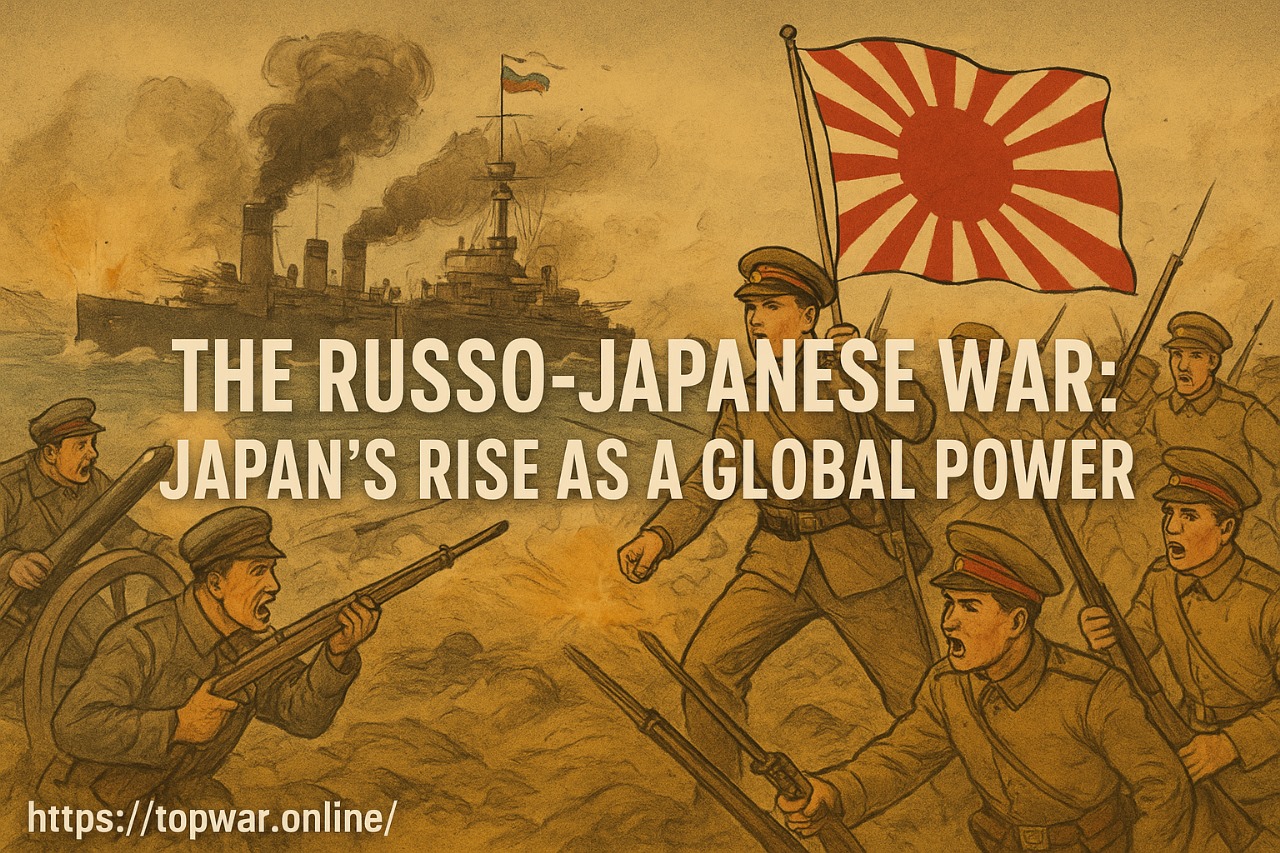
The Russo Japanese War (1904–1905) stands as one of the most significant turning points in modern world history. It was a conflict fought between the Russian Empire and the Empire of Japan over control and influence in Manchuria and Korea. This war shocked the entire world because it marked the first time in modern history that an Asian nation defeated a major European power. The outcome of this war dramatically shifted global political dynamics, inspired independence movements across Asia, and established Japan as a rising global power. This article explores the causes, major events, consequences, and long term impact of the Russo Japanese War in a detailed and comprehensive manner.
Background: Expansion in East Asia and Rising Tensions
In the late 19th century and early 20th century, East Asia became a central region of geopolitical competition. Both Russia and Japan had growing ambitions in the region. Russia sought warm water ports in the Pacific, particularly access to the seas around Manchuria and Korea, which had strategic and economic value. Japan, on the other hand, had rapidly modernized under the Meiji Restoration and emerged as a strong military and industrial power.
Korea was especially important. It had long been a tributary state of China, but after China’s defeat in the First Sino Japanese War (1894–1895), Korea declared independence and came under strong Japanese influence. Russia also eyed Korea, believing it would give access to trade and a position of influence in the region.
These competing ambitions made conflict almost inevitable. The stage was set for a major war between two powerful empires.
The Road to War: Failed Diplomacy and Rising Ambitions
Before the outbreak of war, Japan attempted to negotiate with Russia. The Japanese government proposed that Russia recognize Japan’s interests in Korea in exchange for Japan recognizing Russia’s control in Manchuria. Russia refused the proposal, believing Japan was not powerful enough to challenge the Russian Empire. Russia stalled negotiations, hoping to strengthen its military presence in the region.
This miscalculation by Russia proved fatal. Japan saw that peaceful negotiations were impossible, and with growing military strength and national pride, Japan prepared to go to war.
On February 8, 1904, Japan launched a surprise attack on the Russian fleet at Port Arthur, officially beginning the war.
Japan’s Naval Supremacy: The Attack on Port Arthur
The Japanese navy was one of the most modern in the world at the time. Its attack on the Russian fleet at Port Arthur was a highly strategic move aimed at neutralizing Russia’s naval power before the war escalated further. The surprise attack damaged several Russian ships and gave Japan a strong advantage early in the conflict.
Japan’s naval strategy relied on speed, technology, and coordinated attacks. Unlike Russia, whose fleet was spread across the world, Japan operated in familiar waters and with more cohesive command structures. Japan’s early naval victories set the tone for the rest of the war.
Battles on Land: The Fight for Manchuria
After securing early control at sea, Japan began major land offensives in Manchuria. Japanese armies, well disciplined and modernized, launched coordinated attacks against Russian positions.
One of the largest and most brutal battles of the war was the Battle of Mukden in early 1905. This battle involved over 600,000 soldiers, making it one of the largest land battles in world history at that time. Japan emerged victorious, forcing Russian forces to retreat.
Japan’s success on land shattered the myth of European military superiority. The Japanese army demonstrated that discipline, strategy, and morale could overpower even the largest and most established imperial army.
The Battle of Tsushima: A Decisive Turning Point
Perhaps the most famous and decisive moment of the Russo Japanese War occurred at the Battle of Tsushima in May 1905. Russia had sent its Baltic Fleet on an extremely long journey around Africa to reach East Asia and relieve the besieged Port Arthur.
However, when the Russian fleet approached the waters near Japan, the Japanese navy launched a devastating attack. In this battle, Japan destroyed most of the Russian ships and achieved one of the most complete naval victories in history.
This defeat humiliated Russia on the global stage and confirmed Japan’s position as a dominant power in East Asia.
Domestic Impact in Russia: Calls for Revolution
The Russo Japanese War was disastrous for Russia domestically. The Russian people were already frustrated with poor living conditions, economic hardship, and political repression under Tsar Nicholas II. The humiliating defeat in the war intensified public anger.
This unrest eventually led to the Russian Revolution of 1905, which forced the Tsar to introduce limited political reforms. While the reforms were not enough to prevent later revolutions, the Russo Japanese War played a key role in weakening the Russian monarchy.
The Treaty of Portsmouth: Ending the War
The war officially ended with the Treaty of Portsmouth, mediated by United States President Theodore Roosevelt. Under the treaty, Russia recognized Japan’s interests in Korea and agreed to withdraw from Manchuria. Japan gained significant territorial rights, including control of the Liaodong Peninsula and parts of southern Sakhalin Island.
The treaty marked Japan’s arrival as a major world power. It also earned Roosevelt global recognition and the Nobel Peace Prize for his efforts in mediating the agreement.
Japan’s Rise: A New Global Power
The Russo Japanese War turned Japan into a recognized global power. Japan had defeated a major European empire, something that had seemed impossible before. Japan used its victory to expand its influence across East Asia. Within a few years, Japan formalized its control over Korea, turning it into a colony in 1910.
Japan’s growing power also influenced the upcoming global events of the 20th century. As Japan sought more influence and resources, it ultimately contributed to tensions that would play a role in World War II. However, at the time of the Russo Japanese War, Japan was seen as a symbol of Asian strength and modernization.
Global Impact: A Shock to Western Imperialism
The Russo Japanese War had far reaching consequences far beyond Asia. The war proved that non European nations could defeat European empires with modern military tactics and technology. This victory inspired anti colonial movements across Asia and Africa.
Leaders and revolutionaries in India, China, and the Middle East saw Japan as an example of how modernization and unity could challenge Western dominance. The war also forced European nations to rethink their imperial strategies.
Long Term Consequences: A Changing World Order
The Russo Japanese War marked the beginning of a shift in global power. Japan became a major imperial nation, while Russia’s defeat exposed weaknesses that eventually contributed to the collapse of the Russian Empire during the 1917 revolution.
The war also contributed to rising militarism in Japan, laying the foundation for further expansion in Asia. It influenced global military strategy, diplomacy, and the balance of power leading into the 20th century.
Conclusion: A Historic Turning Point in Global Politics
The Russo Japanese War was not just a regional conflict. It was a defining moment that reshaped global geopolitics. Japan’s victory challenged long held assumptions about European superiority, inspired liberation movements around the world, and signaled the rise of Japan as a formidable global power.
This war remains a critical chapter in world history, showing how determination, modernization, and strategic planning can change the destiny of a nation. The legacy of the Russo Japanese War continues to influence international relations, military strategies, and the history of Asia to this day.