
The Spanish Civil War: The Battle Between Fascism and Democracy
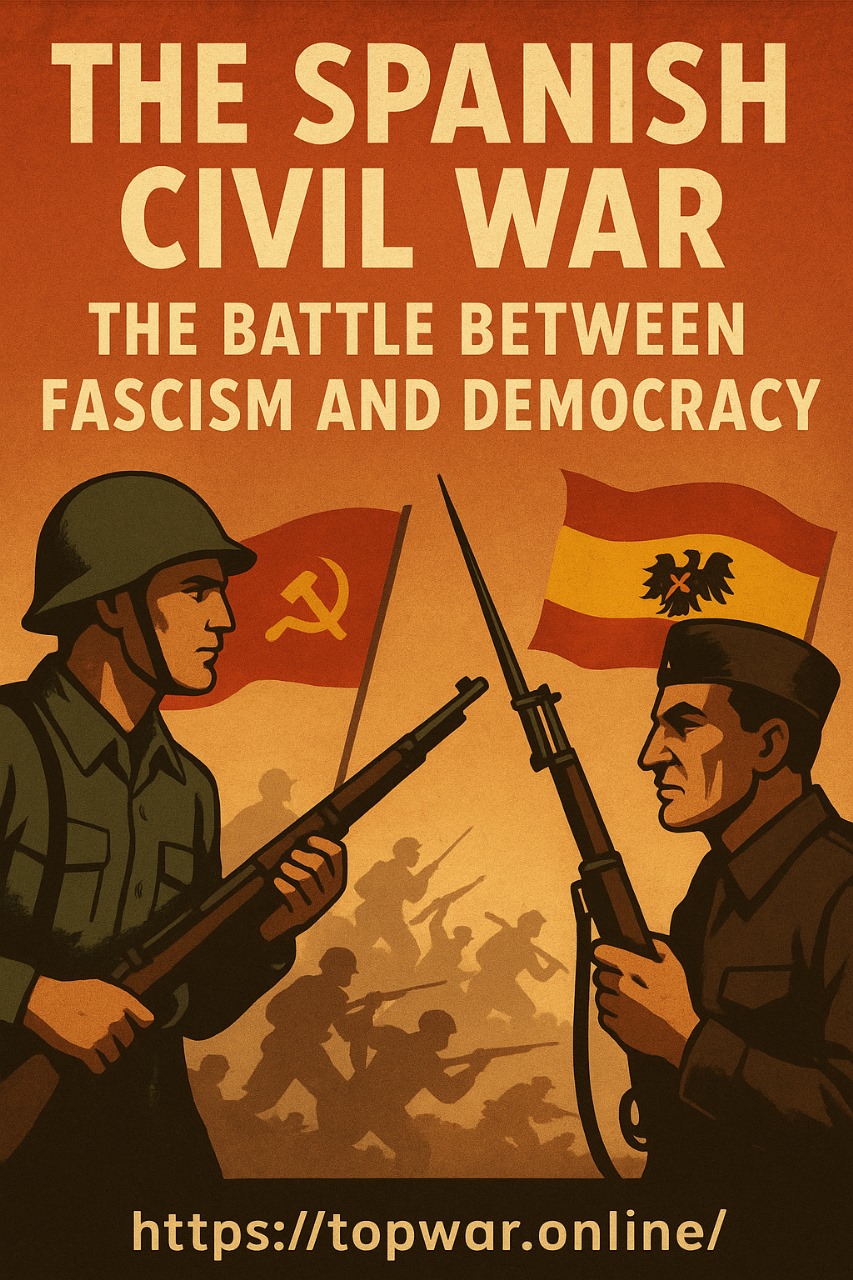
The Spanish Civil War (1936–1939) is one of the most significant and complex conflicts of the 20th century, not just because of its immediate impact on Spain, but because of its broader ideological implications. The war was a fierce and violent battle between the forces of fascism and democracy, and it became a precursor to the ideological struggles that would define much of the global conflict in the years to come, particularly World War II. This article will explore the causes, key events, and legacy of the Spanish Civil War, examining how this battle between fascism and democracy shaped the political landscape of Spain and the world.
The Political Landscape of Pre-Civil War Spain
Before the Spanish Civil War erupted in 1936, Spain was a deeply divided country, struggling with political, social, and economic instability. The Spanish monarchy had been overthrown in 1931, leading to the establishment of the Second Spanish Republic. The Republic, which was initially supported by a broad coalition of progressive forces, aimed to modernize Spain by implementing reforms such as land redistribution, secularization, and labor rights.
However, these reforms quickly faced opposition from conservative forces, including the military, the Catholic Church, and monarchists. Additionally, Spain’s economy was struggling, and the political system was rife with corruption and inefficiency. The social divide between the wealthy elites and the working-class, combined with regional tensions—particularly in Catalonia and the Basque Country—exacerbated the instability.
By the mid-1930s, Spain was increasingly polarized. On one side, left-wing forces, including anarchists, socialists, and communists, pushed for more radical changes. On the other side, right-wing factions, including monarchists, conservatives, and fascists, sought to restore traditional authority and power, often at the expense of democratic values.
The Rise of Francisco Franco and the Nationalist Faction
The immediate precursor to the Spanish Civil War was the military coup launched by a group of army officers in July 1936, led by Francisco Franco, a general who would go on to become the leader of the Nationalist faction. Franco had risen through the ranks of the Spanish army and had developed close ties with conservative and monarchist forces. His faction represented the growing fascist movement in Spain, which sought to suppress left-wing ideologies and create a totalitarian state that mirrored the regimes of Benito Mussolini’s Italy and Adolf Hitler’s Germany.
The military coup, which was supported by conservative elements of Spanish society, was intended to overthrow the democratically elected government of the Second Spanish Republic, which had been struggling to maintain order in the face of rising radicalism. However, the coup was not successful across the entire country. It led to a civil war, as the nation was split between those loyal to the Republican government (composed of left-wing, liberal, and socialist factions) and those supporting Franco’s Nationalists (composed of fascists, monarchists, and other conservative forces).
The Two Sides: The Republicans vs. The Nationalists
The conflict between the Republicans and the Nationalists was both ideological and military. On one side, the Republicans (also known as the Loyalists) were a loose coalition of left-wing groups, including:
- Communists: Led by the Spanish Communist Party, they sought to implement socialist policies.
- Anarchists: The Confederación Nacional del Trabajo (CNT) was a significant anarchist movement that opposed both fascism and centralized state power.
- Socialists: The Spanish Socialist Workers’ Party (PSOE) was a major force within the left-wing coalition, pushing for democratic reforms and workers’ rights.
- Republican supporters: These were moderates who supported the democratic Republic and its reforms but did not necessarily align with any one ideology.
On the other side, the Nationalists (Franco’s faction) were composed of:
- Fascists: Supporters of Francisco Franco, who promoted an authoritarian regime with centralized control, military dominance, and nationalist rhetoric.
- Monarchists: Advocates for the return of the Spanish monarchy, particularly supporters of King Alfonso XIII.
- Conservatives and Catholic Church: The Catholic Church was a key player in supporting the Nationalist cause, fearing the secular reforms of the Republic.
The war was marked by extreme brutality, and both sides were willing to use violent tactics, including terror bombings, executions, and repression of political opposition.
Foreign Intervention: Internationalizing the Conflict
While the Spanish Civil War was fundamentally a battle within Spain, it became internationalized as both the Republicans and the Nationalists received foreign support.
- The Nationalists were supported by Nazi Germany and Fascist Italy, both of which provided significant military aid to Franco’s forces. This included aircraft, tanks, and troops, as well as military advisors. The most infamous example of this support was the German bombing of Guernica in 1937, an attack that killed hundreds of civilians and was immortalized by Pablo Picasso in his famous painting Guernica.
- The Republicans, on the other hand, were supported by the Soviet Union, which sent weapons, advisors, and even troops. However, the support from the Soviet Union was limited, and there were tensions within the Republican side between Communists and Anarchists, further weakening the Republican cause. In addition, although left-wing volunteers from all over the world joined the International Brigades to fight for the Republicans, foreign democratic powers, such as France and the United Kingdom, largely adopted a policy of non-intervention, fearing the escalation of the conflict into a broader European war.
This foreign involvement exacerbated the ideological divide of the war, transforming it from a purely Spanish conflict into a microcosm of the larger struggle between fascism and democracy that would eventually lead to World War II.
Key Battles and the Fall of Madrid
The Spanish Civil War was marked by several major battles, including the Battle of Madrid (1936–1937), the Battle of Jarama, and the Battle of the Ebro (1938). Despite the efforts of the Republicans to defend Madrid, the Nationalists gradually gained control of more territory, and the Republicans were increasingly outmatched by the superior military resources of the Nationalists, aided by Nazi Germany and Fascist Italy.
Throughout the war, the Republicans faced internal divisions, with anarchists and communists often clashing, while the Nationalists presented a unified front under Franco’s leadership. By 1939, the Nationalists had captured Madrid, marking the effective end of the war. Franco declared victory and assumed dictatorial power.
The Aftermath: The Dictatorship of Francisco Franco
With the end of the Civil War in 1939, Franco established a fascist dictatorship that lasted until his death in 1975. His regime suppressed regional languages and cultures, particularly those of Catalonia and the Basque Country, and led to the execution and imprisonment of tens of thousands of Republicans and political opponents.
Franco’s Spain was aligned with the Axis Powers during World War II, although Spain remained officially neutral. However, Spain under Franco continued to receive economic aid from Nazi Germany and Fascist Italy. After World War II, Spain remained isolated from much of Europe, but Franco’s regime endured until the mid-1970s.
Legacy and Impact: A Battle Between Fascism and Democracy
The Spanish Civil War was more than just a war for control of Spain. It was a battle between fascism and democracy that had consequences far beyond Spain’s borders. For the Nationalists, the victory of Franco marked the triumph of authoritarianism, militarism, and nationalism. For the Republicans, the loss was a crushing blow to the forces of democracy, socialism, and left-wing ideology.
The war also set the stage for World War II, as it demonstrated the growing tension between fascist and democratic ideologies. The conflict deeply influenced European politics and international relations, and the failure of the Republican side was a major blow to the broader anti-fascist movement in the 1930s.
Even decades after the end of the Spanish Civil War, Spain continued to grapple with the consequences of Franco’s dictatorship. The Transition to Democracy following Franco’s death in 1975 involved a painful reckoning with the legacy of the war and the dictatorship. Spain’s path to democracy was long and complex, and the trauma of the civil war and the dictatorship lingered in the collective memory of the Spanish people.
Conclusion: The Spanish Civil War’s Enduring Significance
The Spanish Civil War was not just a struggle for control over Spain, but a broader ideological battle between fascism and democracy that echoed across Europe and beyond. It was a war marked by brutal tactics, foreign intervention, and profound ideological divisions. The war ultimately ended in a victory for the forces of fascism, but the Republican defeat would serve as a rallying cry for future generations of anti-fascists and left-wing movements.
In the long term, the Spanish Civil War remains a symbol of the struggles that shaped the 20th century, offering a tragic but powerful reminder of the cost of political polarization and the enduring fight for democracy and human rights.