
Introduction: A Nation Torn Apart
The Lebanese Civil War, spanning from 1975 to 1990, remains one of the most complex and devastating conflicts in modern Middle Eastern history. Often characterized by the intricate interplay of sectarian divisions, political rivalries, and foreign interventions, this war left Lebanon fragmented, traumatized, and struggling to reclaim its national identity. Lebanon, known for its rich cultural diversity and strategic position on the Mediterranean, became a battleground where religious, political, and regional tensions escalated into full-blown civil war. Understanding this conflict requires a close examination of the historical, social, and geopolitical factors that converged to ignite one of the bloodiest conflicts in the post-colonial Arab world.
Historical Context: Lebanon Before the War
Before the outbreak of hostilities, Lebanon was often hailed as the “Switzerland of the Middle East,” renowned for its cosmopolitan cities, vibrant economy, and diverse population. The country’s population was a mosaic of Christians, Muslims, Druze, and other minorities, each with distinct political, social, and religious identities. Lebanon’s confessional political system, established under the National Pact of 1943, allocated political power based on religious affiliation. While this system aimed to maintain balance among Lebanon’s communities, it inadvertently sowed seeds of resentment. Christians, particularly Maronite Christians, dominated political offices, while Muslims felt increasingly marginalized, creating underlying tensions that would later explode into violence.
Root Causes: Politics and Sectarianism
The Lebanese Civil War cannot be understood without analyzing its root causes, which are deeply intertwined with both internal sectarian divisions and external political pressures. The Palestinian refugee crisis played a significant role, especially after the 1967 Six-Day War, when Palestinian guerrilla groups, particularly the PLO, used Lebanon as a base to launch attacks against Israel. This influx disrupted Lebanon’s delicate demographic balance and created tensions between Christian factions and Palestinian militants.
Additionally, economic disparities and political corruption exacerbated sectarian rivalries. Wealth and political influence were concentrated in certain communities, while other groups were left with limited access to resources and representation. As these internal tensions grew, regional powers such as Syria, Israel, and Iran began influencing Lebanese politics, further inflaming divisions. By the early 1970s, Lebanon was a tinderbox, and it only required a spark to ignite widespread conflict.
The Spark: Outbreak of Civil War
The Lebanese Civil War officially began in April 1975, following a series of clashes in Beirut. The immediate trigger was an attack on a bus carrying Palestinian civilians, which resulted in multiple fatalities. This event escalated tensions between Christian militias like the Phalange and Palestinian armed groups, plunging the country into sectarian warfare. What started as a localized conflict in Beirut quickly expanded into a nationwide struggle involving multiple factions, each vying for political control, survival, and territorial dominance.
Major Factions and Their Roles
The Lebanese Civil War was distinguished by its complex web of factions. Understanding these groups is crucial to grasping the conflict’s dynamics:
- Maronite Christian Militias: Primarily represented by the Phalange and Lebanese Forces, these groups sought to preserve Christian dominance in Lebanese politics. They were well-organized, heavily armed, and received support from Israel at various points.
- Muslim Militias: Sunni and Shia militias, including the Amal Movement and later Hezbollah, fought for greater representation and to resist foreign influence. These groups often aligned with Palestinian factions to oppose Christian militias.
- Palestinian Armed Groups: The Palestine Liberation Organization (PLO) became a significant player, operating semi-independently within Lebanon. Their presence heightened tensions with Christians and drew Israel into the conflict.
- Druze Militias: The Druze Progressive Socialist Party, led by Walid Jumblatt, played a critical role in the Mountain War and other key battles, often shifting alliances based on the political situation.
- Foreign Actors: Syria, Israel, Iran, and even Western countries intervened at different stages, providing military, financial, or political support to their preferred factions, making the conflict not just domestic but a regional proxy war.
Phases of the War
The Lebanese Civil War unfolded in multiple phases, each marked by escalating violence and shifting alliances:
1. 1975–1977: The Initial Clashes
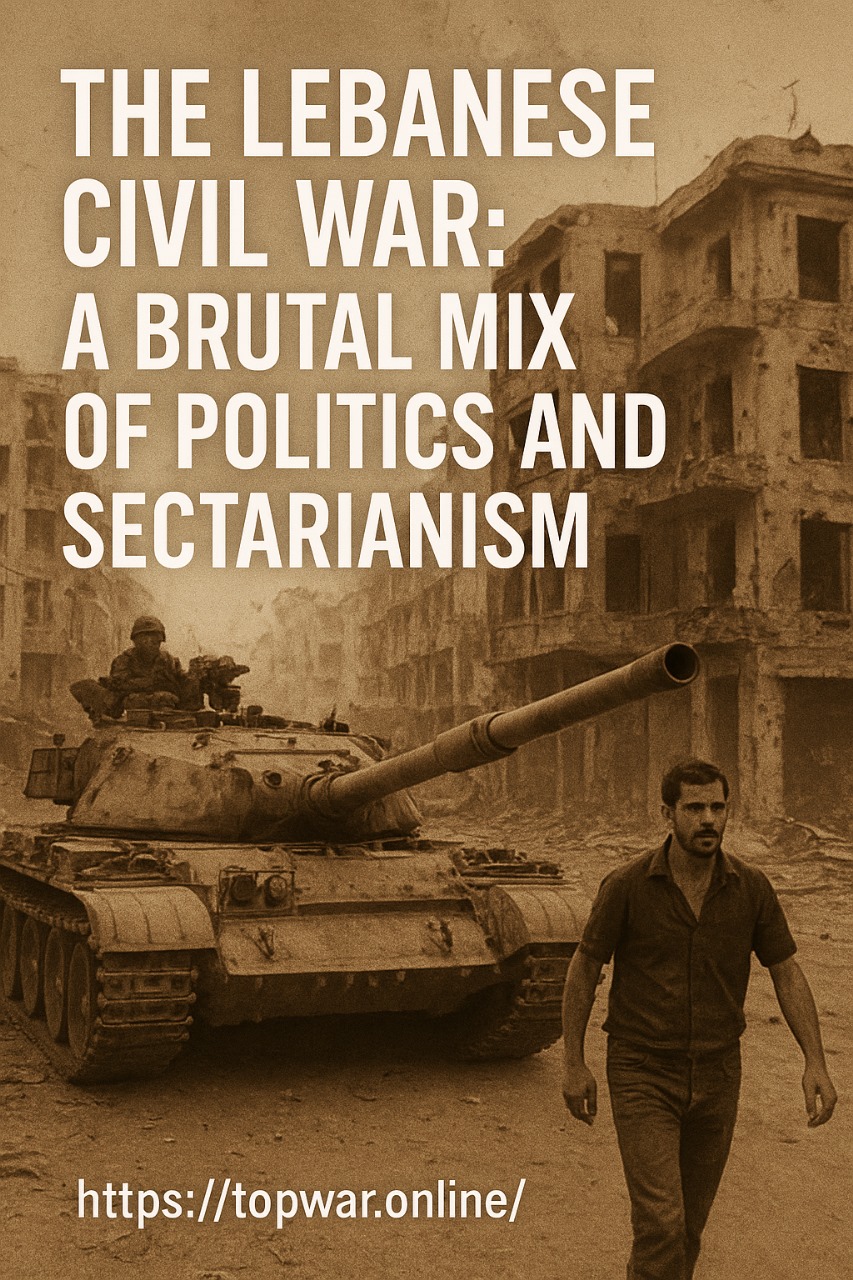
This period saw Beirut divided into Christian East Beirut and Muslim West Beirut. Small skirmishes evolved into full-scale battles, with both sides committing atrocities against civilians. The urban warfare in Beirut, characterized by sniper attacks, car bombings, and sectarian massacres, created a climate of fear and insecurity.
2. 1978–1982: Involvement of Israel and Syria
During this period, Israel invaded southern Lebanon to combat the PLO, while Syria deployed troops ostensibly to stabilize the country. This foreign involvement further complicated alliances and deepened sectarian tensions, leading to widespread displacement and destruction of infrastructure.
3. 1982: The Sabra and Shatila Massacre
One of the darkest moments of the war, the Sabra and Shatila massacre, saw Christian militias kill thousands of Palestinian refugees in Beirut under the watch of Israeli forces. This atrocity drew international condemnation and underscored the war’s brutal nature.
4. 1983–1990: Decline and Resolution
The latter years of the war involved prolonged fighting between militias, foreign interventions, and shifting allegiances. Syria gradually asserted dominance over Lebanon, eventually brokering the Taif Agreement in 1989, which restructured political power and laid the groundwork for ending the civil war.
Humanitarian Impact
The Lebanese Civil War had devastating human, social, and economic consequences. Over 120,000 people were killed, and more than 1 million displaced, including refugees fleeing to Europe and North America. Beirut, once the jewel of the Middle East, was reduced to a city of ruins, with neighborhoods divided by sniper alleys and militia checkpoints. Beyond the physical destruction, the war left psychological scars, intergenerational trauma, and deep mistrust among communities that persist even today.
Economic Collapse
Lebanon’s economy, which had once been one of the most prosperous in the region, collapsed under the weight of war. Banks closed, businesses were destroyed, and infrastructure such as roads, ports, and utilities became non-functional. Inflation skyrocketed, unemployment soared, and millions were forced into poverty. The economic collapse not only prolonged the suffering during the war but also hampered post-war reconstruction efforts.
Political Fragmentation and Sectarianism
One of the war’s most enduring legacies was the deepening of sectarian divisions. The confessional system, while designed to balance power, was exploited during the war to reinforce identity politics. Militias often acted as alternative governance structures, providing security, social services, and political representation along sectarian lines. This fragmentation weakened the state and made national reconciliation a difficult and ongoing challenge.
Foreign Interventions and Regional Implications
Lebanon’s civil war became a proxy battlefield for regional powers. Israel sought to secure its northern border, Syria aimed to assert control over Lebanon, and Iran supported emerging Shia groups like Hezbollah to extend its influence. These interventions transformed a domestic conflict into a regional crisis, drawing in multiple actors and complicating peace efforts. The war’s lessons are particularly relevant today, highlighting how foreign involvement can exacerbate internal divisions.
Resolution: The Taif Agreement
The war officially ended with the Taif Agreement in 1989, brokered under Arab League supervision and international pressure. This agreement rebalanced political power between Christians and Muslims, extended Syrian influence, and called for the disbanding of militias. While the agreement ended large-scale hostilities, it did not fully resolve underlying sectarian tensions, and Lebanese politics remain heavily influenced by sectarian identities.
Lessons Learned
The Lebanese Civil War offers several lessons for policymakers, historians, and conflict analysts:
- Sectarianism is a double-edged sword: While identity politics can protect minority interests, it can also become a tool for division and violence when power is unequally distributed.
- Foreign intervention complicates conflicts: External actors can exacerbate internal disputes, turning local conflicts into proxy wars.
- Economic inequality fuels unrest: Disparities in wealth and political influence were critical in escalating the Lebanese conflict.
- Post-war reconciliation is long-term: Peace agreements may end violence, but rebuilding trust and national identity requires sustained effort.
Conclusion: A Nation Struggling to Heal
The Lebanese Civil War stands as a stark reminder of how political ambition, sectarianism, and foreign intervention can devastate a nation. Lebanon’s story is one of resilience amid tragedy; despite the war’s horrors, the country has gradually rebuilt its institutions, economy, and cultural life. However, the scars of the conflict persist, as sectarian tensions continue to influence politics and society. Studying this war is not only crucial for understanding Lebanon’s modern history but also offers valuable insights into the challenges of governance, coexistence, and peace in multi-ethnic societies.