

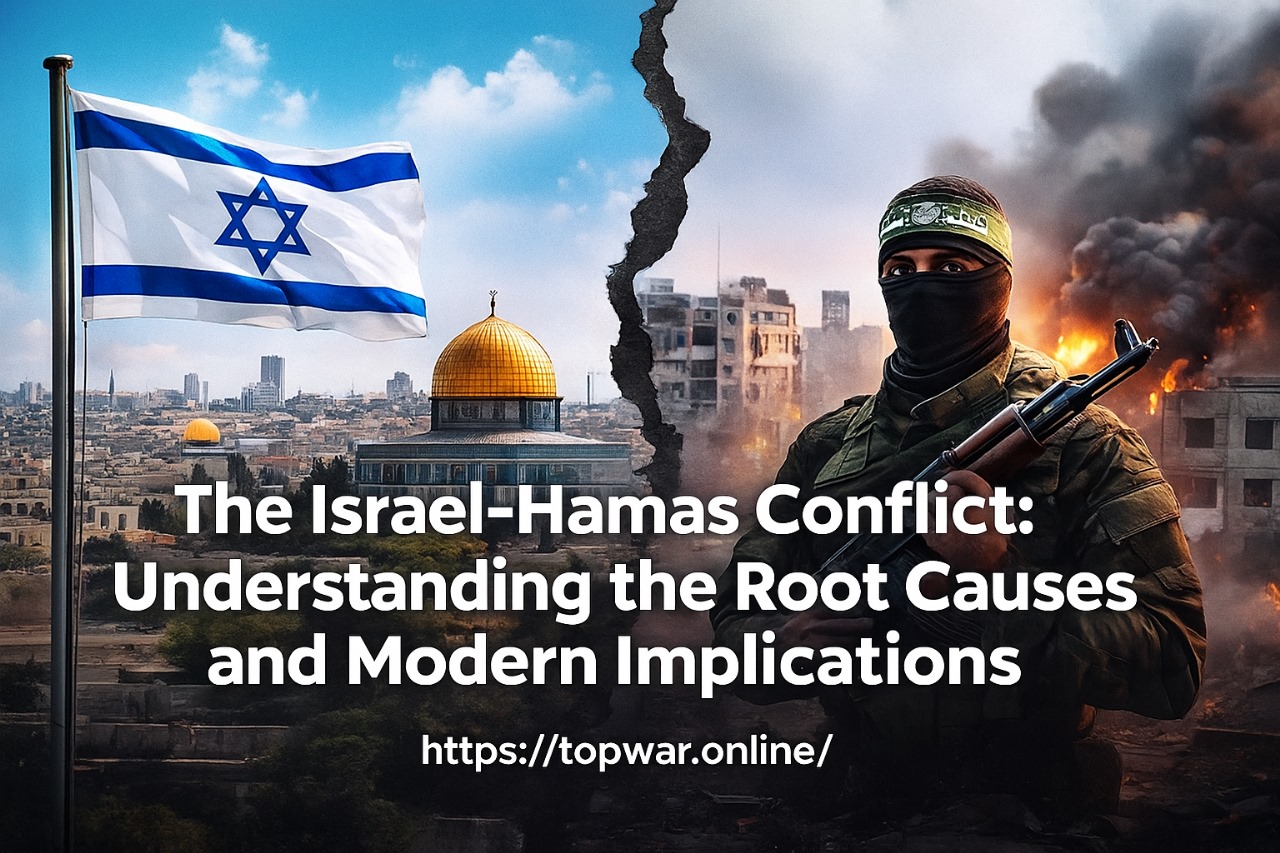
The Israel-Hamas conflict, a long-standing and deeply complex issue, has been a major point of contention in the Middle East for decades. It is part of a broader Israeli-Palestinian conflict, but it specifically involves the struggle between the state of Israel and Hamas, a Palestinian militant organization that controls the Gaza Strip. The origins of this conflict are rooted in historical, political, religious, and territorial disputes, and its implications are far-reaching, affecting regional stability, global politics, and the lives of millions of people.
In this article, we will delve into the root causes of the Israel-Hamas conflict, examine its modern implications, and explore the challenges to achieving peace in the region.
Historical Roots of the Israel-Palestine Conflict
To fully understand the Israel-Hamas conflict, it is essential to look at the broader history of the Israeli-Palestinian conflict, which dates back over a century. The roots of this conflict are embedded in the collision of two national movements: Jewish Zionism and Palestinian Arab nationalism.
The Birth of Israel and Palestinian Displacement
The modern conflict began in the early 20th century, with the rise of Zionism, the Jewish nationalist movement seeking to establish a Jewish homeland in Palestine. At the time, Palestine was part of the Ottoman Empire and later became a British mandate after World War I. Tensions between Jewish and Arab populations grew as Jewish immigration to Palestine increased.
In 1947, the United Nations proposed a plan to partition Palestine into separate Jewish and Arab states. The Jewish leadership accepted the plan, but the Arab states and Palestinian leaders rejected it, arguing that it violated the rights of the Arab population. This led to the 1948 Arab-Israeli War, which resulted in the establishment of the state of Israel. Around 750,000 Palestinians were displaced, becoming refugees in neighboring countries or in areas that would later become the West Bank and Gaza Strip.
The war left a legacy of bitterness and unresolved issues, particularly regarding the fate of Palestinian refugees, the status of Jerusalem, and the borders of Israel.
The Emergence of Hamas: Ideology and Goals
While the broader Israeli-Palestinian conflict continued to shape the region, the emergence of Hamas in the late 1980s marked a significant shift in Palestinian politics and the nature of the conflict with Israel.
The Rise of Hamas in the 1980s
Hamas (short for Harakat al-Muqawama al-Islamiyya, or “Islamic Resistance Movement”) was founded in 1987 during the First Intifada, a Palestinian uprising against Israeli occupation. Hamas originated as an offshoot of the Egyptian Muslim Brotherhood and sought to combine Palestinian nationalism with Islamic principles. Unlike the secular Palestine Liberation Organization (PLO), which had been the dominant force in Palestinian politics, Hamas adopted an explicitly Islamist ideology, advocating for the establishment of an Islamic state in all of historic Palestine.
Hamas’s core objectives are:
- The elimination of Israel: Hamas does not recognize the legitimacy of the Israeli state and calls for its dissolution.
- Jihad and Resistance: Hamas advocates for armed struggle (jihad) as a means of resisting Israeli occupation and expelling Israelis from Palestinian lands.
- Islamic Governance: Hamas seeks to establish an Islamic state governed by Sharia law, a goal that puts it at odds with both Israel and the more secular Palestinian factions like Fatah.
Hamas’s rise was seen as a challenge to the Palestinian Authority (PA), led by Fatah and President Yasser Arafat. While Fatah had pursued negotiations with Israel, Hamas rejected any form of compromise or peace talks, insisting on armed resistance until the establishment of an Islamic state.
The Gaza Strip and Hamas’s Rise to Power
In 2006, Hamas won a surprise victory in the Palestinian legislative elections, defeating Fatah and gaining control of the Gaza Strip. This led to a violent split between Hamas and Fatah, with Hamas taking control of Gaza and Fatah retaining authority in the West Bank. Since then, Gaza has been under Hamas rule, while the West Bank remains under the control of the Palestinian Authority.
Key Factors Fueling the Conflict Between Israel and Hamas
The conflict between Israel and Hamas is driven by multiple factors, including territorial disputes, ideological differences, and religious tensions. Some of the key factors include:
1. Territorial Disputes and the Gaza Blockade
The Gaza Strip is one of the most densely populated areas in the world and has been at the center of the conflict between Israel and Hamas. Since Hamas’s takeover of Gaza in 2007, Israel has imposed a strict blockade on the territory, citing security concerns related to Hamas’s weapons smuggling and rocket attacks. This blockade has led to severe humanitarian conditions for the people of Gaza, with high levels of poverty, unemployment, and limited access to basic services.
Hamas, on the other hand, has used the blockade to rally support among Palestinians, framing it as an act of collective punishment by Israel. The situation has created a cycle of violence, with Hamas launching rockets into Israeli territory and Israel responding with airstrikes and military operations in Gaza.
2. Religious and Ideological Differences
The conflict is not merely territorial; it is also deeply religious and ideological. The Israeli-Palestinian conflict has religious undertones, especially in Jerusalem, a city that holds sacred significance for Jews, Christians, and Muslims alike. Hamas’s ideology, which blends Islamic nationalism with resistance to Israeli occupation, presents a challenge to the secular vision of the Palestinian Authority and to Israel’s existence.
The religious divide is also evident in the broader Middle East, where Hamas enjoys support from countries like Iran, which shares its anti-Israel stance. Israel, in contrast, has the backing of the United States and many Western countries, creating a broader geopolitical divide.
3. Cycles of Violence and Retaliation
The Israel-Hamas conflict has been marked by frequent outbreaks of violence, often triggered by specific incidents but escalating into large-scale military operations. These include rocket attacks from Gaza into Israeli cities, Israeli airstrikes on Gaza, and ground operations that result in heavy casualties on both sides. Each cycle of violence leaves deep scars, and efforts to achieve lasting ceasefires have been repeatedly undermined by mutual distrust and ongoing provocations.
Modern Implications of the Israel-Hamas Conflict
The Israel-Hamas conflict has far-reaching implications, not just for the parties involved, but for regional stability and global geopolitics.
1. Humanitarian Crisis in Gaza
One of the most pressing concerns is the humanitarian crisis in Gaza. The blockade, coupled with repeated Israeli military operations, has devastated the Gaza Strip’s infrastructure. Access to clean water, healthcare, and electricity is severely limited, and poverty rates are extremely high. International organizations have repeatedly condemned the living conditions in Gaza, but efforts to address the situation have been hampered by the ongoing conflict and lack of political will on both sides.
2. Regional Destabilization
The conflict between Israel and Hamas also has broader regional implications. It fuels anti-Israel sentiment across the Arab world and has been a point of contention in many Arab-Israeli relations. While some Arab countries, particularly those in the Gulf, have taken steps toward normalizing relations with Israel (e.g., through the Abraham Accords), the conflict with Hamas remains a key issue.
Additionally, the support Hamas receives from Iran and other groups further complicates regional dynamics, particularly in the context of the broader Iranian-Israeli rivalry.
3. Global Diplomacy and Peace Efforts
The international community, led by the United Nations, the United States, and the European Union, has made several attempts to mediate peace between Israel and the Palestinians. However, efforts to establish a two-state solution, which would allow for a Palestinian state alongside Israel, have stalled. Hamas’s refusal to recognize Israel and its commitment to armed resistance have been major obstacles to peace negotiations.
At the same time, the conflict has influenced global politics, with countries around the world taking sides based on their geopolitical interests, religious affiliations, and historical alliances.
Conclusion: A Path to Peace?
The Israel-Hamas conflict remains one of the most intractable and volatile conflicts in the world. The root causes, which include territorial disputes, religious tensions, and deep ideological differences, continue to fuel violence and instability. While the conflict is often framed in terms of immediate military confrontations, its underlying causes are much more profound, requiring a comprehensive and lasting political solution.
Ultimately, any path to peace will require addressing the humanitarian crisis in Gaza, recognizing the legitimate rights of the Palestinian people, and ensuring Israel’s security. While the future remains uncertain, the international community must continue to push for dialogue, understanding, and a solution that can bring an end to decades of violence and suffering.