
Introduction: The Longest Conventional War of the 20th Century
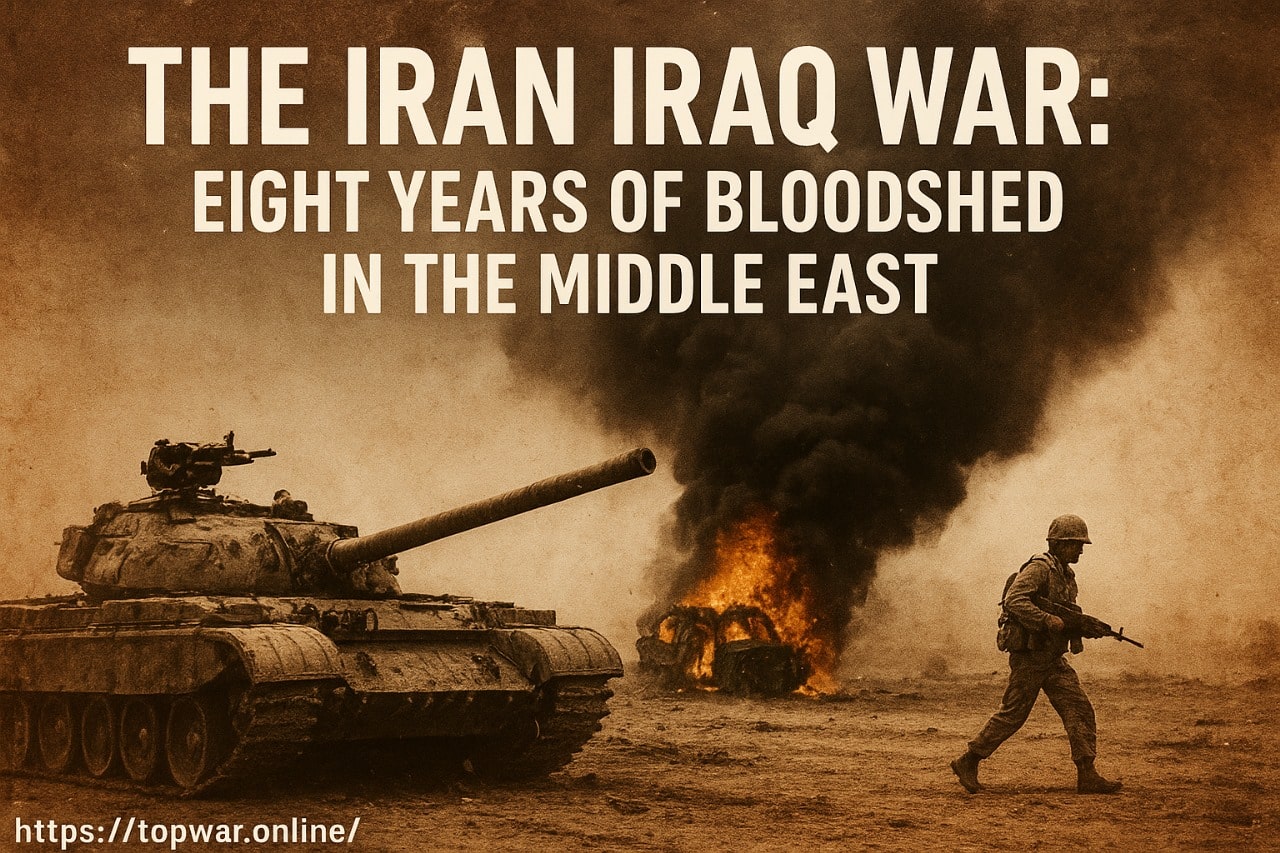
The Iran–Iraq War (1980–1988) stands as one of the most destructive and prolonged military conflicts of the 20th century, leaving deep scars across the Middle East and reshaping geopolitical dynamics for decades to come. What began as a border dispute fueled by political, ideological, and personal rivalries soon escalated into a brutal war characterized by trench warfare, chemical weapon usage, missile strikes on major cities, and devastating economic losses. Over the course of eight years, both Iran and Iraq poured enormous resources into a conflict that ultimately left neither side victorious and resulted in hundreds of thousands of casualties. This war not only altered the internal structures of both nations but also influenced global superpower politics during the Cold War era. Today, the Iran–Iraq War is remembered as a tragic example of political miscalculations, failed diplomacy, and the enormous human cost of prolonged conflict.
Historical Background: The Seeds of Conflict
The origins of the Iran–Iraq War can be traced to a complex mix of territorial disputes, historical rivalries, and ideological tensions that simmered for decades before erupting into full-scale conflict. Iraq, led by President Saddam Hussein, had long been eyeing control over the oil-rich province of Khuzestan in southwestern Iran, home to a large Arab population. Additionally, Iraq contested Iran’s authority over the strategic Shatt al-Arab waterway, a crucial passage that connected Iraq to the Persian Gulf and served as the country’s main outlet for oil exports.

Beyond territorial concerns, the political developments in Iran following the 1979 Islamic Revolution significantly alarmed Saddam Hussein and other leaders in the Arab world. The overthrow of Iran’s monarchy and the establishment of an Islamic government under Ayatollah Ruhollah Khomeini introduced a new ideological threat to the region. Khomeini’s message of Islamic revolution resonated with marginalized Shi’a populations in Iraq, causing Saddam to fear domestic instability and the spread of revolutionary sentiments. With both nations harboring deep mistrust and competing visions for regional dominance, tensions escalated to the point where war seemed increasingly inevitable.
The Outbreak: Iraq Invades Iran (1980)
On September 22, 1980, Iraq launched a massive, multi-front invasion of Iran, marking the official start of the war. Saddam Hussein expected a quick victory, believing that Iran, still recovering from the political upheaval of the Islamic Revolution, was too disorganized to mount an effective defense. Iraq’s initial attack targeted strategic border cities, oil installations, and military bases. Iraqi forces made rapid progress in the early weeks of the conflict, capturing key territories, including parts of Khuzestan and the border city of Khorramshahr.
However, Saddam’s assumption that Iran would crumble proved to be a major miscalculation. Despite internal divisions and weakened military capabilities, Iran mobilized masses of volunteers—many of them young, untrained, and motivated by religious devotion. Iran’s revolutionary leadership framed the conflict as a “sacred defense,” calling on the population to fight for national survival and Islamic principles. As the war escalated, the conflict transformed into a fierce ideological struggle, drawing millions of Iranians into the battlefield.
The Turning Tide: Iran’s Counteroffensive (1981–1982)
By mid-1981, Iran had reorganized its military operations and launched a series of counterattacks aimed at reclaiming lost territory. The newly formed Islamic Revolutionary Guard Corps (IRGC), alongside the regular Iranian army, played a central role in these operations. Iran adopted human-wave assault strategies, sending large numbers of volunteers—including teenagers—into heavily fortified Iraqi positions. Although these tactics resulted in extremely high casualties, they ultimately proved effective in overwhelming Iraqi defenses.
In May 1982, Iranian forces recaptured Khorramshahr in one of the most decisive victories of the war. This turning point shocked the Iraqi leadership and signaled the collapse of Iraq’s initial military objectives. After successfully pushing Iraqi forces back across the border, Iran rejected ceasefire offers and set its sights on toppling Saddam Hussein’s regime. What began as a defensive war for Iran now evolved into an ambitious campaign to punish Iraq and reshape the political landscape of the region.
Stalemate and Attrition: Trench Warfare and the Battle for Survival (1982–1986)
After Iran carried the war into Iraqi territory, the conflict devolved into a grueling war of attrition reminiscent of World War I trench battles. Both sides dug extensive trench networks, deployed massive artillery, and engaged in brutal close-quarters combat along stagnant frontlines. The flat terrain of southern Iraq, especially in areas like Basra, became a killing ground where neither side could achieve decisive breakthroughs.
One of the bloodiest confrontations of the conflict occurred during Iran’s series of offensives known as Operation Kheibar and Operation Badr, where Iranian forces attempted to capture Basra by crossing the marshlands of southern Iraq. Despite early successes, the offensives ultimately failed to achieve their strategic objectives, with both sides suffering heavy casualties.
During this period, Iraq received significant support from regional and Western powers, including Saudi Arabia, Kuwait, the United States, and parts of Europe. Many of these states viewed Iran’s revolutionary ideology as a threat to their stability and sought to prevent Iran from achieving victory. Meanwhile, Iran remained largely isolated on the international stage, relying primarily on its own resources, volunteer fighters, and limited covert support from a few countries.
Weapons of Mass Destruction: Chemical Warfare in the Iran–Iraq War
One of the darkest and most controversial aspects of the Iran–Iraq War was the widespread use of chemical weapons by Iraq. Facing superior Iranian manpower and persistent offensives, Saddam Hussein authorized the deployment of chemical agents—including mustard gas, sarin, and tabun—against Iranian troops and Kurdish civilians. These attacks caused thousands of deaths and long-term medical complications for survivors. Despite clear violations of international law, the global response to Iraq’s chemical weapon usage was muted, partly due to geopolitical considerations and Cold War alignments.
Iran repeatedly condemned Iraq’s use of chemical weapons and appealed to the international community, but these calls were largely ignored. The failure to hold Iraq accountable at the time contributed to future security crises in the Middle East and highlighted the limitations of global non-proliferation agreements during the Cold War era.
The Tanker War: Battle for Control of the Persian Gulf
As the war dragged on, both Iran and Iraq sought to disrupt each other’s oil revenues—crucial sources of funding for their war efforts. This led to the so-called Tanker War, during which both nations attacked commercial oil tankers and other vessels in the Persian Gulf. Iraq used aircraft and missiles to target ships heading to Iranian ports, while Iran retaliated by attacking Kuwaiti and Saudi tankers, which it claimed were indirectly supporting Iraq.
The escalating threat to global oil supplies prompted intervention from major world powers, particularly the United States, which began escorting reflagged Kuwaiti tankers under Operation Earnest Will. The presence of U.S. naval forces in the Gulf led to several confrontations with Iran, including the shooting down of Iran Air Flight 655 by a U.S. Navy cruiser in 1988—a tragic incident that killed 290 civilians and further inflamed tensions.
War Fatigue: Economic Collapse and Human Suffering
By the mid-1980s, both Iran and Iraq were suffering immense economic and human losses. The war had drained national budgets, destroyed infrastructure, and devastated oil production. Iraq, although supported financially by Gulf states and armed by Western powers, had accumulated massive debt and struggled to maintain its war effort. Iran, on the other hand, faced severe international sanctions, shortages of military supplies, and dwindling morale among fighters and civilians.
The human cost of the war was staggering. Estimates vary, but total casualties on both sides are believed to range between 500,000 and 1,000,000 dead and wounded. Millions more were displaced, and large areas of both countries were left in ruins. The war also took a psychological toll on societies, creating lasting trauma for soldiers and civilians alike.
The Endgame: Ceasefire and Resolution 598
By 1987 and 1988, the balance of power began shifting in favor of Iraq. With advanced weaponry received from global suppliers and increasing tactical coordination, Iraqi forces launched major offensives that reclaimed lost territory and weakened Iran’s battlefield positions. Iran’s internal political divisions, economic struggles, and declining morale further eroded its ability to continue the war.
On July 20, 1987, the United Nations Security Council passed Resolution 598, calling for an immediate ceasefire and negotiations to end the conflict. Initially rejected by Iran, the resolution eventually became the only viable option as the country faced increasing military and economic pressure. On July 18, 1988, Iran’s leadership agreed to the ceasefire, effectively ending the war. Ayatollah Khomeini described the decision as akin to “drinking a chalice of poison,” reflecting the profound difficulty of accepting peace without achieving victory.