

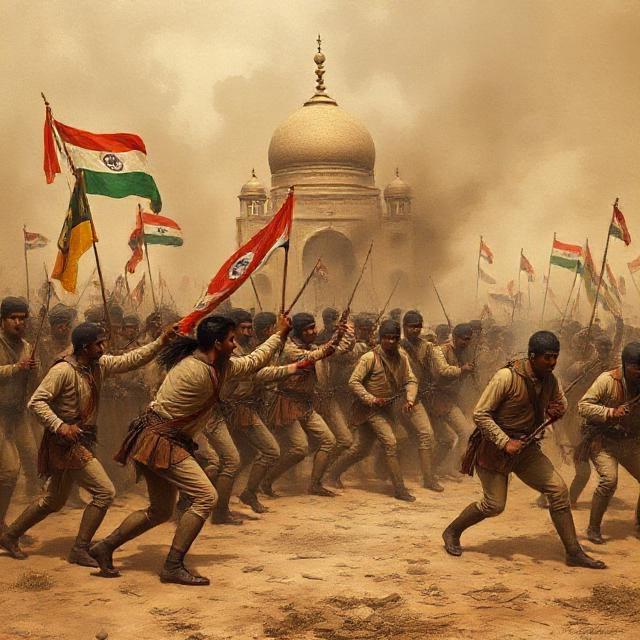
Introduction: A Pivotal Moment in Indian History
The Indian Rebellion of 1857, often referred to as the First War of Independence, stands as one of the most significant uprisings against colonial rule in Indian history. Marking a turning point in India’s struggle against the British East India Company, the rebellion was fueled by a complex interplay of political, economic, social, and religious factors. It was not merely a military confrontation but a widespread movement that resonated deeply across different strata of Indian society, involving soldiers, peasants, artisans, and local rulers. The rebellion left an indelible impact on India’s socio-political landscape, influencing both colonial policies and the nationalist movement in the decades to follow.
Historical Context: Seeds of Discontent
By the mid-19th century, India had been under the control of the British East India Company for nearly two centuries. The Company’s aggressive expansionist policies, combined with exploitative taxation systems and disrespect for traditional Indian institutions, created widespread dissatisfaction among various sections of society. The Doctrine of Lapse, introduced by Lord Dalhousie, further aggravated the situation by annexing princely states whose rulers died without male heirs. This policy stripped local rulers of their legitimate authority and fueled resentment among the aristocracy and their subjects alike.
Economically, India was being transformed into a supplier of raw materials for British industries, while local artisans and farmers were subjected to heavy taxation and deprived of traditional livelihoods. Social and religious sentiments were also under threat. The introduction of Western education and the interference in cultural and religious practices led to fears of forced conversion and cultural erosion. These grievances collectively set the stage for a massive upheaval.
Immediate Trigger: The Enfield Rifle Controversy
The immediate spark for the 1857 rebellion was the introduction of the new Enfield P-53 rifle cartridges by the British. The cartridges were rumored to be greased with cow and pig fat, offending both Hindu and Muslim religious beliefs. Hindu soldiers, or sepoys, considered cows sacred, while Muslims regarded pigs as unclean. The requirement to bite the cartridges before loading them into rifles was seen as a direct affront to religious sensibilities.
In March 1857, sepoys in the Bengal Army stationed at Meerut refused to use the cartridges. Their disobedience was met with harsh punishments, including imprisonment and flogging, which ignited widespread anger and fear among the soldiers. This event acted as a catalyst, transforming existing discontent into organized rebellion.
Key Leaders of the Rebellion
The rebellion was characterized by a diverse group of leaders from different regions and backgrounds, each bringing unique strategies and motivations to the struggle.
- Mangal Pandey: Often remembered as one of the first martyrs of the rebellion, Mangal Pandey’s attack on British officers at Barrackpore in March 1857 symbolized the beginning of the revolt. His actions inspired sepoys across India to resist British authority.
- Rani Lakshmibai of Jhansi: Known for her bravery and leadership, Rani Lakshmibai became an icon of resistance. She mobilized her forces effectively and led multiple battles against British troops, displaying remarkable courage and tactical skill.
- Bahadur Shah II: The aged Mughal emperor, who was initially a symbolic figurehead, was declared the leader of the rebellion in Delhi. His role lent legitimacy to the uprising, uniting rebels from various regions under a common banner.
- Tantia Tope and Nana Sahib: Both prominent figures in Central India, they led significant military campaigns, demonstrating strategic acumen and inspiring local populations to join the revolt.
Spread of the Rebellion
The uprising began in Meerut on May 10, 1857, and quickly spread to Delhi, where the rebels seized control and declared Bahadur Shah II as the Emperor. From Delhi, the rebellion spread to regions across North and Central India, including Kanpur, Lucknow, Jhansi, and Gwalior. The participation of diverse communities, including peasants, artisans, and soldiers, made the movement widespread, though it lacked centralized coordination.
In Kanpur, Nana Sahib led a fierce resistance, most notably in the siege of the British garrison. The violence and reprisals during these confrontations shocked both the British and Indian populations, highlighting the intensity of the revolt. Similarly, in Lucknow, the prolonged defense of the Residency by British officers became legendary, illustrating the brutal and prolonged nature of the conflict.
Social and Religious Dimensions
The rebellion was not solely a military conflict; it had profound social and religious undertones. For many, the revolt represented resistance against attempts to undermine traditional practices and authority. Policies such as the introduction of Western education, Christian missionary activities, and interference in temple and mosque affairs created resentment among Indians.
Moreover, the rebellion brought together people of different religions and castes, at least temporarily, under a shared cause. Hindus and Muslims fought side by side, transcending communal boundaries to resist foreign domination. This unity, however, was often regional and situational rather than systematic, reflecting the fragmented nature of Indian society at the time.
Military Tactics and Battles
The Indian rebels used a combination of traditional and modern military strategies. Fortifications, guerrilla warfare, and direct assaults on British garrisons characterized much of the fighting. Despite initial successes, lack of coordination and standardized weaponry hindered sustained victories.
- Siege of Delhi: Capturing Delhi was both a symbolic and strategic objective. The rebels managed to hold the city for several months, but British reinforcements eventually recaptured it, leading to brutal reprisals.
- Battle of Jhansi: Rani Lakshmibai’s leadership in defending Jhansi showcased the determination of local rulers to resist annexation and foreign domination.
- Gwalior Campaign: Tantia Tope led a remarkable retreat and regrouping campaign, demonstrating resilience despite heavy losses.
British Response and Suppression
The British response was initially slow but eventually became highly organized and ruthless. Reinforcements were sent from Britain and other colonies, and the East India Company adopted scorched-earth policies to suppress the rebellion. Villages suspected of harboring rebels were destroyed, and mass executions were carried out to deter further resistance.
The capture of Delhi in September 1857 marked a turning point. Bahadur Shah II was captured, tried, and exiled to Rangoon, symbolizing the end of the Mughal dynasty. By mid-1858, most major centers of rebellion had been subdued, though pockets of resistance continued for several months.
Aftermath and Impact
The rebellion had far-reaching consequences for India. Politically, it marked the end of the East India Company’s rule, and India came directly under the control of the British Crown through the Government of India Act 1858. This transition led to the establishment of the British Raj, characterized by more centralized control and a formalized administrative structure.
Socially and culturally, the rebellion left a legacy of resentment, resistance, and nationalism. Although it was ultimately unsuccessful, the uprising inspired subsequent generations of freedom fighters and became a symbol of India’s struggle for independence. Economically, it led the British to restructure taxation, revenue policies, and military recruitment strategies to prevent future revolts.
Legacy: The First War of Independence
Today, the Indian Rebellion of 1857 is remembered as the First War of Independence, reflecting its role in igniting a national consciousness against colonial rule. It demonstrated the ability of Indians from diverse backgrounds to unite against a common oppressor, setting the stage for the organized nationalist movements of the late 19th and early 20th centuries. Monuments, museums, and historical studies commemorate the sacrifices of those who fought, ensuring that their struggle continues to inspire new generations.
Conclusion
The Indian Rebellion of 1857 was more than a military uprising—it was a multifaceted movement encompassing political, social, economic, and religious dimensions. It exposed the vulnerabilities of colonial rule, highlighted the courage and resilience of Indian leaders and common people, and left a lasting legacy on India’s journey toward independence. While it did not achieve immediate political success, its significance as the First War of Independence continues to resonate, reminding us of the enduring human desire for freedom and justice.