

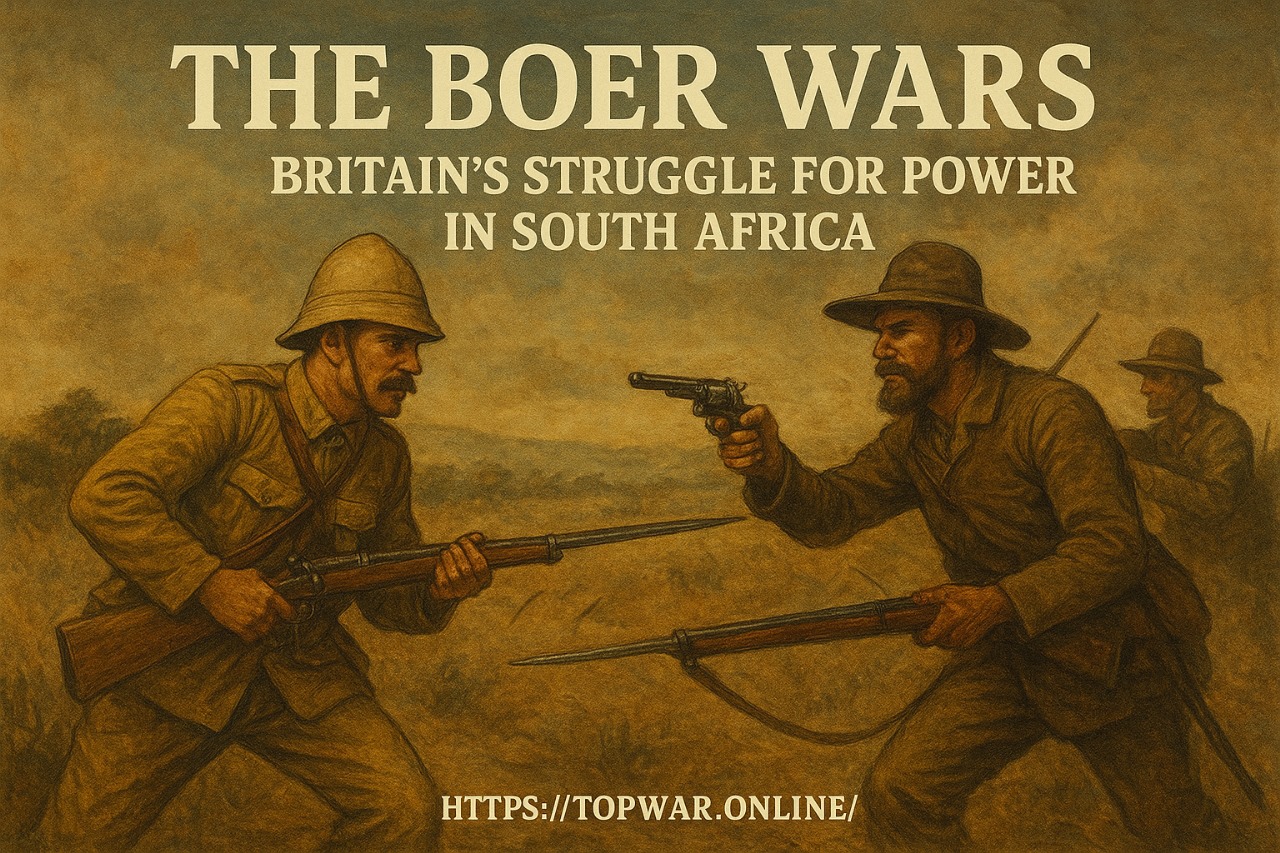
Introduction: Clash of Empires in Southern Africa
The Boer Wars, fought between the British Empire and the Boer republics of South Africa, represent one of the most pivotal conflicts in the late 19th and early 20th centuries. These wars were not merely territorial disputes but reflected a complex mixture of imperial ambition, resource control, national identity, and racial politics. The discovery of gold and diamonds in the Boer-controlled territories intensified the struggle, drawing international attention and transforming South Africa into a key strategic region for the British Empire. Over the course of two wars, the First Boer War (1880–1881) and the Second Boer War (1899–1902), Britain faced fierce resistance from the Boers, descendants of Dutch settlers, who leveraged their knowledge of the land, guerrilla tactics, and strong local governance to challenge imperial forces.
Historical Background: The Boers and British Expansion
The Boers, also known as Afrikaners, were settlers of Dutch descent who migrated into the interior of South Africa during the 18th and early 19th centuries. Their migrations, known as the Great Trek, were driven by a desire to escape British colonial rule in the Cape Colony and preserve their cultural and religious autonomy. The Boers established independent republics, including the Transvaal (South African Republic) and the Orange Free State, with their own governments and military structures. Meanwhile, Britain expanded its influence throughout Southern Africa, annexing the Cape Colony and seeking control over trade routes, ports, and mineral-rich territories. The convergence of British imperial ambitions and Boer determination to maintain independence set the stage for inevitable conflict.
First Boer War (1880–1881): Resistance and Early Defeat
The First Boer War erupted in 1880 as tensions between the British and the Boer republics escalated. The British attempted to assert direct control over the Transvaal, disregarding Boer claims to self-governance. Initially confident in their military superiority, British forces faced unexpectedly effective Boer resistance. The Boers, utilizing guerrilla tactics and intimate knowledge of the terrain, scored decisive victories at battles such as Majuba Hill. Despite their smaller numbers, Boer commandos disrupted British formations, inflicted heavy casualties, and forced Britain into a negotiated settlement. The war concluded with the Pretoria Convention of 1881, granting the Transvaal self-governance under British suzerainty and signaling the limitations of British military power in the region.
Economic Stakes: Gold, Diamonds, and Imperial Interests
The discovery of diamonds in Kimberley (1867) and gold in the Witwatersrand (1886) dramatically increased the stakes of British-Boer relations. The mineral wealth attracted international investment, accelerated migration to the region, and made South Africa an economic jewel for the British Empire. Control over these resources meant control over global trade networks, industrial supply, and imperial prestige. The Boers’ insistence on sovereignty over their mineral-rich territories clashed with British imperial interests, intensifying hostilities. Economic motivations were thus inseparable from military and political causes, making the Boer Wars not only a struggle for land but also a battle for wealth, influence, and imperial dominance.
Second Boer War (1899–1902): The Total War
The Second Boer War marked a dramatic escalation in both scale and intensity. The conflict began when Britain attempted to assert greater control over Boer territories, and the Boers, anticipating aggression, launched preemptive strikes against British garrisons. This war became notorious for its brutality, with both conventional battles and guerrilla warfare shaping the conflict. British forces, initially unprepared for the mobility and tactics of Boer commandos, suffered significant losses. The Boers’ use of hit-and-run raids, sabotage, and knowledge of the terrain frustrated conventional British military strategies, prolonging the war and forcing Britain to adapt.
Guerrilla Warfare and British Countermeasures
The Boers’ guerrilla tactics posed a serious challenge to the British. Small, highly mobile commando units avoided large-scale confrontations, instead focusing on ambushes, supply line disruption, and surprise attacks. In response, Britain implemented scorched-earth policies, destroying farms, livestock, and infrastructure to deny Boer commandos resources and support. Additionally, Britain established concentration camps to detain civilians, particularly women and children, as part of their counterinsurgency strategy. These measures, while militarily effective, drew international criticism and caused immense human suffering, highlighting the harsh realities of colonial warfare.
Key Battles and Turning Points
Several major engagements shaped the outcome of the Second Boer War. Early battles, such as Stormberg, Magersfontein, and Colenso, demonstrated British vulnerability to Boer tactics. Later, battles at Paardeberg and the relief of Ladysmith marked strategic turning points, showcasing the ability of the British to adapt, deploy reinforcements, and apply overwhelming force. Despite these successes, guerrilla resistance persisted, prolonging the conflict and necessitating the use of extreme measures to subdue the Boers. The war ultimately reflected a combination of traditional military engagements and asymmetrical warfare, illustrating the adaptability and resilience of both sides.
Social and Human Cost
The Boer Wars caused immense suffering among soldiers and civilians alike. Casualties numbered in the tens of thousands, while the scorched-earth tactics and concentration camps inflicted widespread deprivation and death. Boer civilians, particularly women and children, were disproportionately affected, with thousands dying from disease and malnutrition in British camps. The human cost left a lasting imprint on South African society, deepening divisions between British authorities and the Afrikaner population and creating intergenerational trauma that influenced politics, identity, and reconciliation in the decades that followed.
British Victory and Treaty of Vereeniging
The Boer resistance was ultimately overcome by British reinforcements, superior resources, and the exhaustion of Boer manpower. The war formally ended with the Treaty of Vereeniging in 1902, which recognized British sovereignty over the Transvaal and the Orange Free State but promised eventual self-government. The treaty also addressed issues such as reconciliation, reconstruction, and financial compensation for the Boers. While Britain emerged victorious, the war exposed the limits of imperial power, the challenges of asymmetrical warfare, and the necessity of political negotiation in consolidating control over contested territories.
Legacy of the Boer Wars
The Boer Wars left a profound legacy in South Africa and beyond. Politically, they reshaped governance, laying the foundation for the Union of South Africa in 1910. Militarily, the conflicts influenced counterinsurgency strategies and highlighted the complexities of modern colonial warfare. Socially and culturally, the wars deepened divisions between Afrikaners and English-speaking populations while creating a collective memory of resilience and suffering. Economically, the consolidation of British control over mineral wealth facilitated industrial growth and integration into the global economy. The Boer Wars remain emblematic of the struggle between imperial ambition and local autonomy, reflecting broader patterns of conflict in the age of European expansion.
Conclusion
The Boer Wars exemplify the collision of empire, identity, and resource-driven ambition. Britain’s attempts to dominate South Africa faced determined resistance from the Boers, whose military skill, local knowledge, and commitment to independence prolonged the conflict and challenged imperial assumptions. The wars combined conventional battles, guerrilla tactics, and total war strategies, leaving a lasting imprint on military practice, social structures, and historical memory. Ultimately, the Boer Wars were more than a military struggle they were a contest over sovereignty, culture, and the future of a strategically vital region, shaping the trajectory of South Africa and the British Empire for decades to come.