

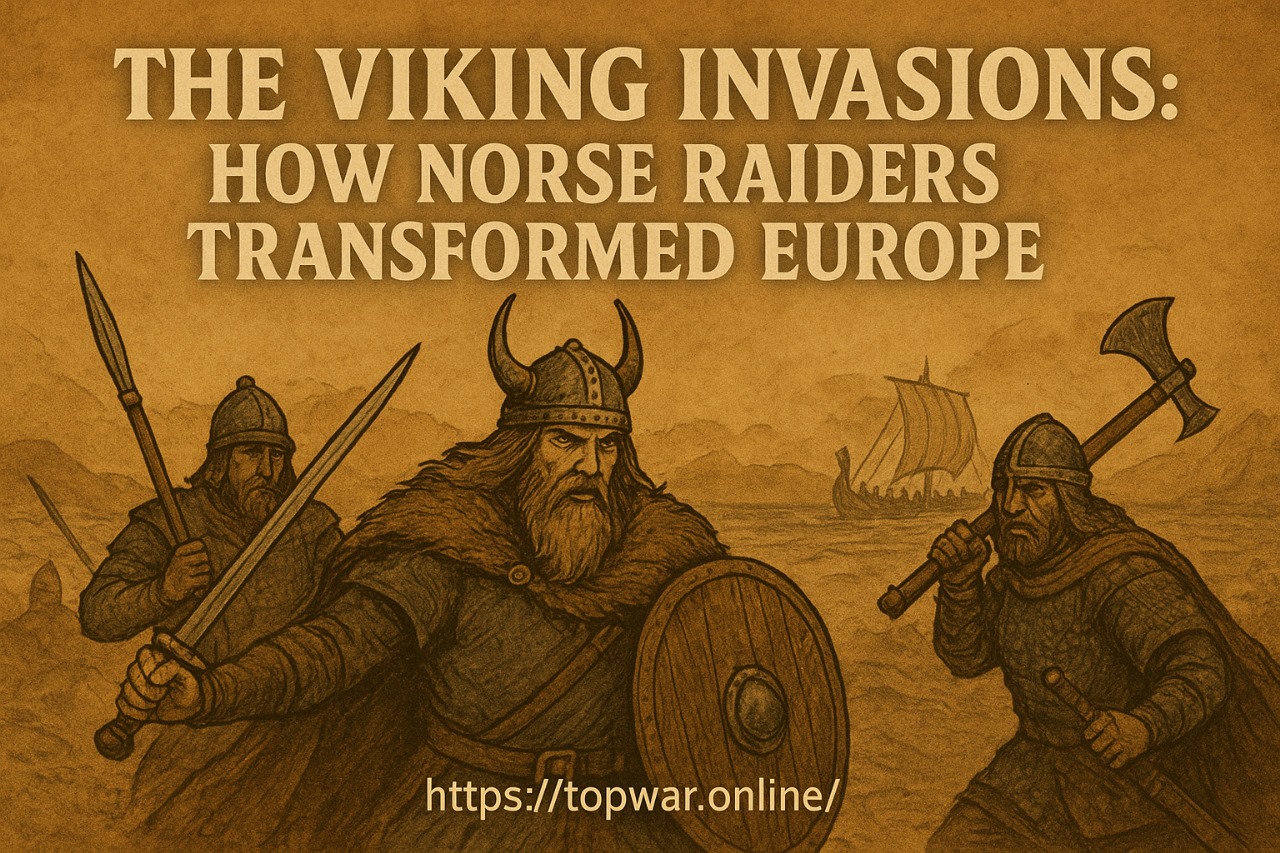
Introduction: Europe in the Age of Norse Raiders
Between the late 8th and 11th centuries, Europe faced a dramatic period of upheaval due to the Viking invasions. The Vikings, originating from modern-day Norway, Sweden, and Denmark, were renowned for their seafaring skills, raiding tactics, and later, their settlements. Their sudden attacks across the continent transformed political boundaries, disrupted societies, and reshaped economies. Monasteries, towns, and cities faced raids that instilled fear, yet the Vikings also established trading networks and communities that left a lasting impact. Their influence extended far beyond mere destruction, altering the trajectory of European development and leaving a legacy of cultural exchange and transformation.
Origins of the Viking Expansion
Viking expansion was driven by multiple factors. The Scandinavian environment was harsh, with limited arable land, which encouraged migration and exploration. Advances in shipbuilding enabled longships to navigate both oceans and shallow rivers, allowing raids deep into Europe. Social pressures, including competition among chieftains and the ambitions of young warriors, motivated many to seek wealth and status abroad. This combination of environmental, technological, and social factors created a class of Norsemen capable of striking fear into the heart of medieval Europe while also contributing to its economic and cultural evolution.
Early Raids in England
The Viking Age began in 793 with the attack on the monastery of Lindisfarne. This raid shocked the Christian world due to its violence and desecration of sacred sites. England, divided into smaller kingdoms, was particularly vulnerable. Monasteries and wealthy towns became frequent targets, providing both resources and notoriety for Viking raiders. These initial incursions established the Vikings as a formidable force, creating a climate of fear and prompting local rulers to reconsider their defensive strategies. Over time, these raids laid the foundation for more extensive Viking involvement in the British Isles.
Expansion into Continental Europe
Following successes in England, Vikings moved into continental Europe, targeting the Frankish Empire, the Low Countries, and northern France. Their longships allowed them to travel upriver, attacking towns and cities far from the coast. The siege of Paris in 845 exemplifies the reach and audacity of these raids. As attacks continued, local rulers began to adapt, building fortifications and organizing military defenses. Some Vikings settled in the conquered regions, merging with local populations and contributing to political and social developments, particularly in Normandy and along the Loire River.
Settlement and Trade
While initially focused on raiding, many Vikings transitioned to settlement and trade. In Ireland, England, and France, they established towns and ports that became centers of commerce. Norse settlers contributed to agriculture, craftsmanship, and long-distance trade. The foundation of Normandy is a key example, where Viking leaders integrated into local society, adopting Christianity and feudal structures. Trade networks facilitated the movement of goods such as furs, silver, and textiles, connecting Northern Europe to the Mediterranean and beyond. The Vikings’ dual role as raiders and traders profoundly shaped the European economy.
Impact on the British Isles
The Viking presence in the British Isles had far-reaching effects. Repeated attacks on kingdoms like Northumbria, Mercia, and Wessex prompted stronger defensive measures and greater political centralization. The establishment of the Danelaw in eastern and northern England introduced Norse laws, customs, and settlements, influencing local governance and culture. Cities like York became thriving commercial centers under Viking control. The integration of Norse and Anglo-Saxon populations over time contributed to the unification of England and the development of a unique cultural identity.
Influence in France
In France, Viking raids along the Seine and Loire prompted negotiations with the Frankish kings. Land grants in exchange for loyalty led to the creation of the Duchy of Normandy under the Viking chieftain Rollo. The Normans retained elements of their Scandinavian heritage while adopting French language, culture, and Christian faith. This integration strengthened local governance and influenced European politics, culminating in the Norman conquest of England in 1066. The Viking legacy in France demonstrates how former raiders became influential political and military actors.
Vikings in Eastern Europe
Vikings also expanded eastward, traveling along rivers such as the Volga and Dnieper. Known as Varangians in this region, they established trade networks and settlements that laid the foundation for the Kievan Rus. These Norse settlers integrated with Slavic populations, influencing political structures, trade practices, and cultural traditions. Their activity connected Northern Europe with Byzantium and the Middle East, highlighting the Vikings’ role as both warriors and merchants and their broader impact on early medieval European globalization.
Military Tactics and Warfare
Vikings were highly effective warriors due to their mobility, adaptability, and innovative tactics. Longships allowed them to strike unexpectedly along rivers and coasts. They used coordinated infantry and naval strategies, combining speed with surprise to overwhelm opponents. Weapons such as axes, swords, and spears, along with strategic flexibility, made Viking forces formidable. Their military approach forced European kingdoms to develop new defensive methods, fortifications, and army structures, contributing to the evolution of medieval warfare.
Cultural and Religious Influence
Vikings not only brought destruction but also facilitated cultural exchange. As they settled in foreign lands, they blended Scandinavian art, language, and customs with local traditions. Many converted to Christianity, influencing religious practices and governance. Artistic styles, including decorative metalwork and architectural elements, merged with European designs. This cultural fusion enriched societies and helped integrate Norse settlers into European civilization, demonstrating that the Viking legacy extended beyond raids and conquest.
Women in Viking Society
Women played an important role in Viking communities, particularly in managing households, farms, and trade during periods of raiding and warfare. They enjoyed certain legal rights, including property ownership and inheritance, which were advanced for the period. Women also supported settlements by maintaining social cohesion and participating in economic and communal activities. Their contributions were crucial for the sustainability and success of Viking settlements in Europe.
Decline of Viking Raiding
By the 11th century, Viking raids gradually declined. European kingdoms had strengthened defenses and military organization, making raids more difficult. The consolidation of power in Scandinavia and the conversion to Christianity shifted Norse priorities toward governance, trade, and settlement rather than raiding. While large-scale attacks ended, the impact of the Viking Age remained evident in politics, culture, and trade networks across Europe.
Economic Impact
Vikings had a lasting effect on European economies. They established trading hubs, connected distant regions, and facilitated the flow of goods such as silver, furs, and amber. Their commercial activities promoted urban development, stimulated local markets, and introduced new economic practices. By combining raiding, settlement, and trade, the Vikings played a crucial role in shaping the early medieval European economy.
Legacy of the Viking Age
The Viking invasions fundamentally transformed Europe. Politically, they influenced state formation, local governance, and feudal structures. Culturally, they left a lasting mark on art, language, and law. Economically, they created trade networks that enhanced connections between Europe and distant regions. Militarily, they introduced strategies and technologies that influenced European warfare. The Viking legacy demonstrates the complexity of their impact, showing that they were both destroyers and builders of European society.
Conclusion
The Viking invasions reshaped Europe over several centuries. Through raiding, settlement, and trade, the Norse left an enduring imprint on political structures, economies, cultures, and warfare. Their presence in England, France, Eastern Europe, and beyond illustrates a legacy that combined violence, innovation, and integration. The Viking Age highlights the capacity of a single people to transform the course of history and offers enduring lessons about adaptability, resilience, and cultural exchange.