
Introduction: The Global Stage Before the Storm
World War II remains one of the most transformative events of the twentieth century, shaping international relations, politics, and society for decades to come. It was not merely a conflict of armies but a struggle of ideologies, economic systems, and ambitions for global dominance. The seeds of World War II were sown in the aftermath of World War I, during a period marked by economic instability, political turmoil, and the rise of extremist ideologies across Europe. The Treaty of Versailles, which ended World War I, left Germany humiliated, economically crippled, and politically unstable, creating fertile ground for radical leaders like Adolf Hitler to exploit nationalist sentiments and promises of revival.
The world between the wars was a volatile mix of recovery and resentment. The Great Depression of the 1930s exacerbated social and economic hardships, making radical political movements increasingly appealing. As Hitler and the Nazi Party consolidated power in Germany, the world watched with apprehension. Meanwhile, Japan and Italy pursued imperial ambitions, setting the stage for a truly global conflict. World War II, therefore, was not an isolated event but the culmination of decades of geopolitical tension, economic crisis, and ideological clashes.
Adolf Hitler’s Rise and the Nazi Consolidation of Power
The rise of Adolf Hitler to power in Germany was both rapid and meticulously orchestrated. Born in Austria in 1889, Hitler’s early life was marked by failure and frustration, yet he developed an early obsession with German nationalism and anti-Semitic ideology. The devastation of World War I and the perceived injustice of the Treaty of Versailles became central to his worldview, fueling his hatred of the Allies and the democratic Weimar Republic. By exploiting widespread economic despair and nationalist fervor, Hitler and the Nazi Party promised to restore Germany’s former glory and expand its territorial boundaries.
Upon becoming Chancellor in 1933, Hitler moved swiftly to consolidate power. The Reichstag Fire and the subsequent Enabling Act effectively allowed him to bypass democratic processes and establish a totalitarian regime. Political opponents were silenced, dissent was crushed, and propaganda became a powerful tool to control public opinion. The Nazi regime’s focus on military expansion, racial purity, and ideological indoctrination laid the foundation for the aggressive foreign policies that would trigger global conflict. Hitler’s calculated moves and strategic alliances created an environment where war became increasingly inevitable.
The Road to Global Conflict: Early Aggressions
Before World War II officially erupted, Germany, Italy, and Japan pursued aggressive territorial expansions. In 1936, Germany remilitarized the Rhineland in defiance of the Treaty of Versailles, testing the resolve of France and Britain. Italy, under Benito Mussolini, invaded Ethiopia in 1935, demonstrating the League of Nations’ inability to maintain peace. Meanwhile, Japan continued its expansion in East Asia, invading Manchuria in 1931 and later China in 1937. These actions, largely unchecked by Western powers, emboldened the Axis nations and highlighted the weaknesses of international diplomacy.
The annexation of Austria in 1938, known as the Anschluss, followed by the occupation of the Sudetenland in Czechoslovakia, marked Germany’s bold expansionist policies. Appeasement, particularly by Britain’s Prime Minister Neville Chamberlain, delayed confrontation but failed to prevent the outbreak of war. Hitler’s demand for Lebensraum (“living space”) in Eastern Europe further intensified tensions, as neighboring nations feared German domination. By the late 1930s, the world stood on the brink of an unprecedented global war.
The Outbreak of War: 1939–1940
World War II officially began on September 1, 1939, when Germany invaded Poland using Blitzkrieg, a strategy of rapid and overwhelming force. Britain and France, honoring their alliance with Poland, declared war on Germany, marking the start of a European conflict that would quickly escalate into a global confrontation. The invasion of Poland demonstrated Germany’s military ingenuity and the devastating effectiveness of coordinated air, land, and armored attacks. Within weeks, Poland was conquered, signaling the beginning of Axis dominance in Europe.
Following Poland’s fall, Germany swiftly turned its attention to Western Europe. Denmark and Norway fell in 1940, followed by the lightning conquest of France. The French surrender in June 1940 shocked the world, leaving Britain as the last major European power resisting Nazi expansion. Meanwhile, Italy entered the war on Germany’s side, seeking to expand its influence in North Africa and the Mediterranean. The early years of World War II were characterized by Axis victories, setting the stage for a prolonged and devastating global conflict.
The Eastern Front and the Soviet Resistance
One of the most pivotal theaters of World War II was the Eastern Front, where Germany sought to conquer the Soviet Union. Operation Barbarossa, launched in June 1941, marked the beginning of a brutal campaign that would become one of the bloodiest conflicts in human history. Hitler’s initial successes brought vast territories under German control, but the harsh Russian winters, logistical challenges, and fierce Soviet resistance turned the tide. Cities like Leningrad and Stalingrad became symbols of courage, endurance, and immense suffering, with millions of soldiers and civilians perishing.
The Soviet Union’s ability to absorb initial losses, mobilize its industrial resources, and eventually push back German forces was crucial in weakening the Axis powers. The Eastern Front consumed enormous military resources and diverted German attention from other theaters of war. Battles like Stalingrad and Kursk not only marked strategic turning points but also demonstrated the resilience and determination of nations resisting Axis aggression. The Soviet counteroffensives ultimately played a decisive role in the eventual collapse of Nazi Germany.
The Pacific Theater and Japanese Expansion
While Europe faced the rise of Nazi Germany, the Pacific theater saw Japan pursuing an imperial agenda. Japan’s invasion of China, followed by its attack on Pearl Harbor on December 7, 1941, brought the United States into the conflict. The attack on Pearl Harbor was a strategic gamble aimed at crippling the U.S. Pacific Fleet, but it backfired by galvanizing American resolve. The United States declared war on Japan, and Germany and Italy reciprocated, making World War II a truly global conflict.
The Pacific campaign was characterized by island-hopping, naval battles, and intense jungle warfare. Battles such as Midway, Guadalcanal, and Iwo Jima highlighted the brutal nature of warfare in the Pacific. The conflict between Japan and Allied forces demonstrated both strategic ingenuity and the immense human cost of war. Ultimately, the relentless pressure from the Allies and the use of atomic bombs on Hiroshima and Nagasaki in 1945 forced Japan’s surrender, ending hostilities in the Pacific.
The Home Front and Civilian Impact
World War II was not confined to battlefields; it profoundly affected civilian populations. Cities were bombed, economies were mobilized for war production, and populations endured rationing, displacement, and loss. The Holocaust, perpetrated by Nazi Germany, remains one of the darkest chapters of human history, resulting in the systematic extermination of six million Jews and millions of others deemed undesirable by the Nazi ideology. The war also accelerated technological and social change, including advances in medicine, aviation, and industry, while redefining gender roles as women entered the workforce in unprecedented numbers.
Civilian resilience and suffering were central to the narrative of World War II. From Londoners enduring the Blitz to Soviet civilians rebuilding cities, the war demanded extraordinary endurance. The conflict reshaped societies, leaving lasting legacies on politics, human rights, and international cooperation.
The Fall of the Axis Powers
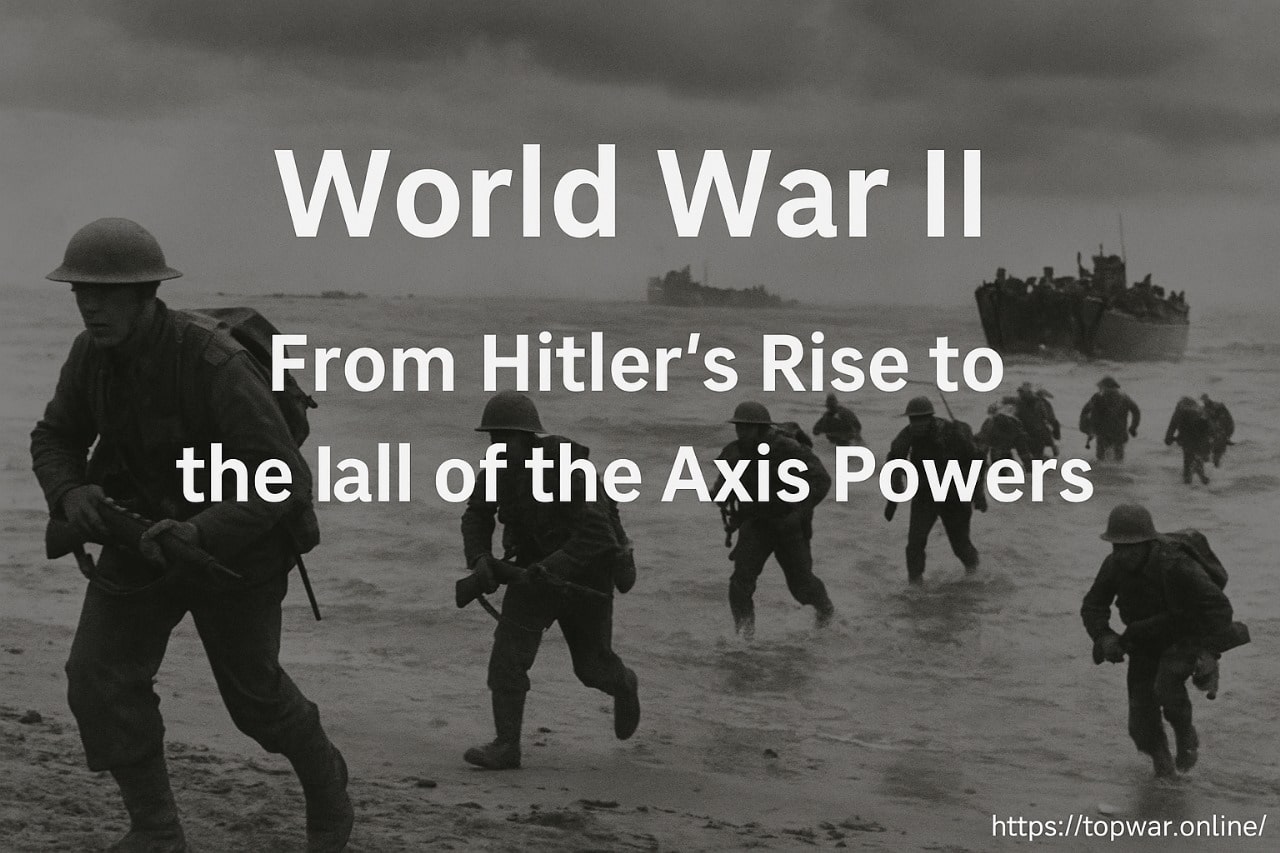
By 1944, the tide of World War II had decisively turned against the Axis powers. In Europe, the D-Day invasion of Normandy on June 6, 1944, marked the beginning of the end for Nazi Germany. Allied forces advanced from the west while the Soviet Union pushed from the east, ultimately leading to Hitler’s suicide in April 1945 and Germany’s unconditional surrender in May. In the Pacific, the relentless Allied advance, combined with the devastation of Hiroshima and Nagasaki, forced Japan to surrender in September 1945.
The fall of the Axis powers was the result of sustained military campaigns, strategic alliances, and the mobilization of global resources. It demonstrated the interconnectedness of theaters and the importance of international cooperation in defeating totalitarian regimes. The end of World War II ushered in a new world order, with the United Nations established to prevent future global conflicts.
Conclusion: Legacy and Lessons
World War II reshaped the global landscape, leaving legacies that continue to influence international relations, political ideologies, and societal structures. It highlighted the dangers of unchecked aggression, the costs of appeasement, and the resilience of nations under duress. The war also underscored the importance of international cooperation, human rights, and the moral imperative to confront tyranny. From Hitler’s rise to the fall of the Axis powers, World War II serves as a profound reminder of the consequences of hatred, ambition, and ideological extremism.
The lessons of World War II remain relevant today, guiding policies, alliances, and global security measures. The horrors of the conflict, the heroism of ordinary people, and the transformative impact on the 20th century ensure that its history will continue to be studied, remembered, and reflected upon for generations to come.